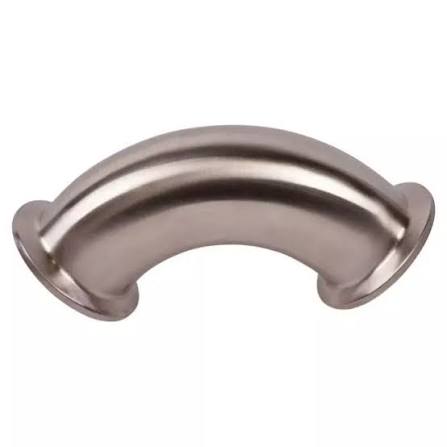
How to Select the Right Fittings for High-Pressure Conditions? From Threaded to Socket-Weld – A Complete Technical Analysis by a Professional Supplier
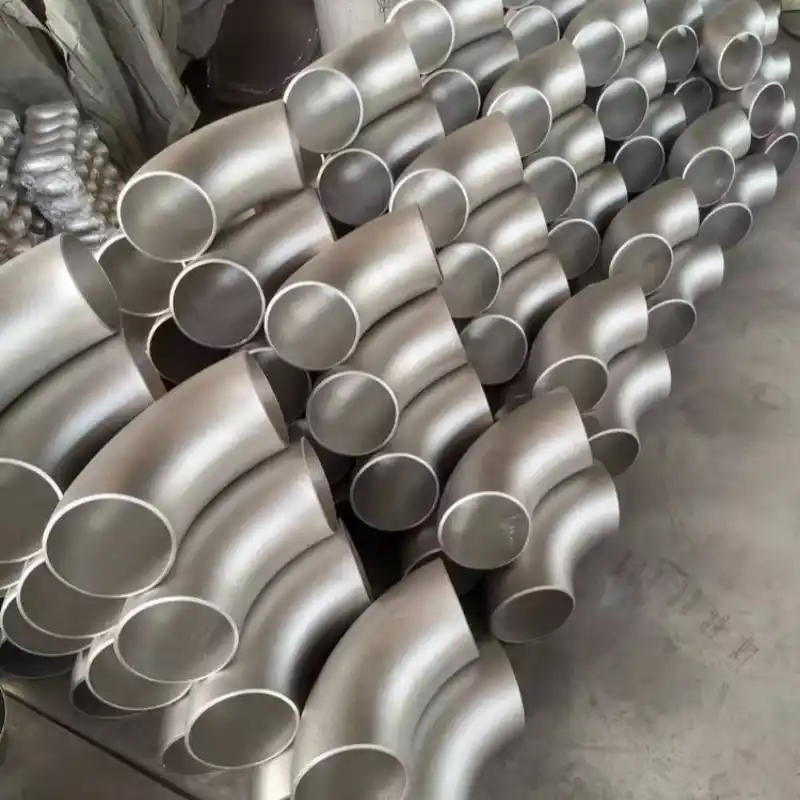
In the fields of petrochemicals, ultra-high-pressure water jetting, hydraulic power units, and natural gas gathering, stainless steel high pressure pipe fittings are the most stress-intensive parts of any piping system. A substandard elbow or tee can become the bursting origin of the entire system under pressures of several thousand pounds.
As a manufacturer and supplier specializing in high-pressure connection solutions for many years, we not only offer standard stock products but also provide customized stainless steel high pressure pipe fittings for special working conditions. This article breaks down the technical logic behind professional selection from four dimensions: material standards, connection methods, customization capability, and inventory response.
I. Material & Standards: “Genetic Determinism” in High-Pressure Scenarios
For high pressure stainless steel pipe fittings, the chemical composition and mechanical properties of the material are the cornerstones of safety. The industry generally follows ASTM A182 (forged stainless steel) or A403 (welded stainless steel). For the most common F316L material, the molybdenum content is not less than 2.5%, which gives the fittings resistance to pitting corrosion in chloride environments.
When the working pressure exceeds Class 3000 (approx. 7.5MPa / 1100psi), we strongly recommend using forged fittings instead of welded ones – forging eliminates coarse microstructures at welds and makes the grain flow denser.
Key data: According to ASME B16.11, for Class 6000 high-pressure stainless steel socket-weld pipe fittings, the wall thickness must reach at least 9.5mm (for 1/2-inch size), and the hydrostatic test pressure is typically 1.5 times the design pressure.
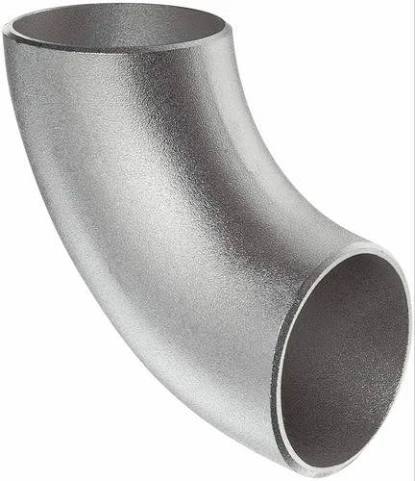
For example, a 1-inch 90° elbow used in a hydraulic press line with a design pressure of 6000 psi must be tested at 9000 psi and held for at least 30 seconds, with no leakage or permanent deformation allowed.
II. Connection Methods: Threaded vs. Socket-Weld – Which is Better for High Pressure?
This is the most common dilemma for engineers. We offer both high pressure stainless steel threaded pipe fittings and high-pressure stainless steel socket-weld pipe fittings. The choice depends on the installation environment and maintenance needs.
-
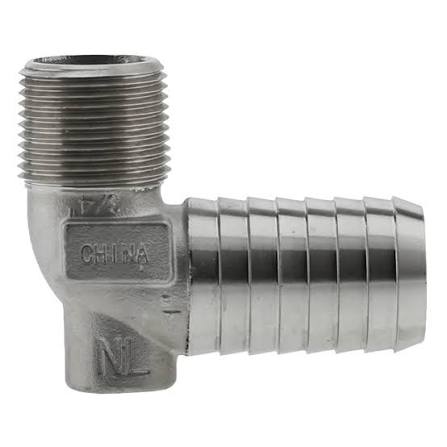
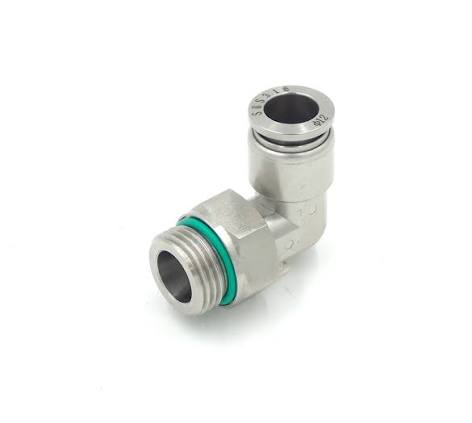
Threaded Connection: Suitable for small diameters (typically ≤ 2 inches) and applications requiring frequent disassembly. Our NPT taper threads (conforming to ANSI B1.20.1) have a 60° thread angle and 1:16 taper. In ultra-high-pressure applications up to 10,000 psi, stress concentration at the thread root is significant, so sealant or PTFE tape must be used, and no cracks are allowed within the effective thread length. In actual inspection, we use thread gauges to control the deviation of the ring gauge from the reference plane within ±1 thread.
-
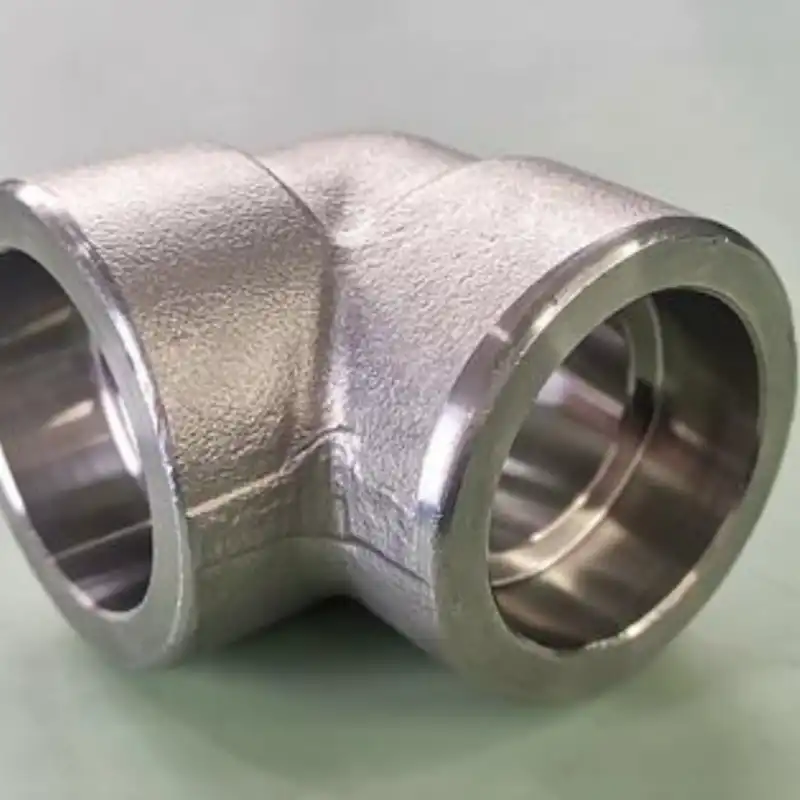
Socket-Weld Connection: Socket-weld provides better fatigue resistance and sealing, suitable for systems with high vibration or pressure pulsation (e.g., reciprocating compressor outlets). According to ASME B31.1, the insertion depth for socket-weld must leave a 1.6mm expansion gap (i.e., the pipe end should not bottom out in the socket), and the fillet weld leg height should be 1.4 times the thinner wall thickness.
In our factory, all high-pressure stainless steel socket-weld pipe fittings undergo 100% radiographic testing (RT) to ensure defect-free weld penetration.
III. Customization Capability: How to Accurately Realize Non-Standard Requirements?
Standard fittings cannot cover all extreme working conditions. For example, a deep-sea Christmas tree project required a reducing cross with 12.7mm wall thickness, rated for 15,000 psi, made of super duplex stainless steel S32750.
As a professional high pressure stainless steel pipe fittings company, our process is: first, simulate stress distribution under maximum load using Finite Element Analysis (FEA); then use multi-directional forging to achieve near-net shape in one process, avoiding secondary welding. After machining, each customized stainless steel high pressure pipe fittings undergoes hardness testing (HB ≤ 280), intergranular corrosion testing (ASTM A262 Practice E), and magnetic particle inspection (MT).
It is worth noting that for custom orders, we provide a complete 3.1 material certificate (conforming to EN 10204) and hydrostatic test report, ensuring a complete traceability chain.
IV. Stock Availability: When Emergency Needs Meet Delivery Pressure
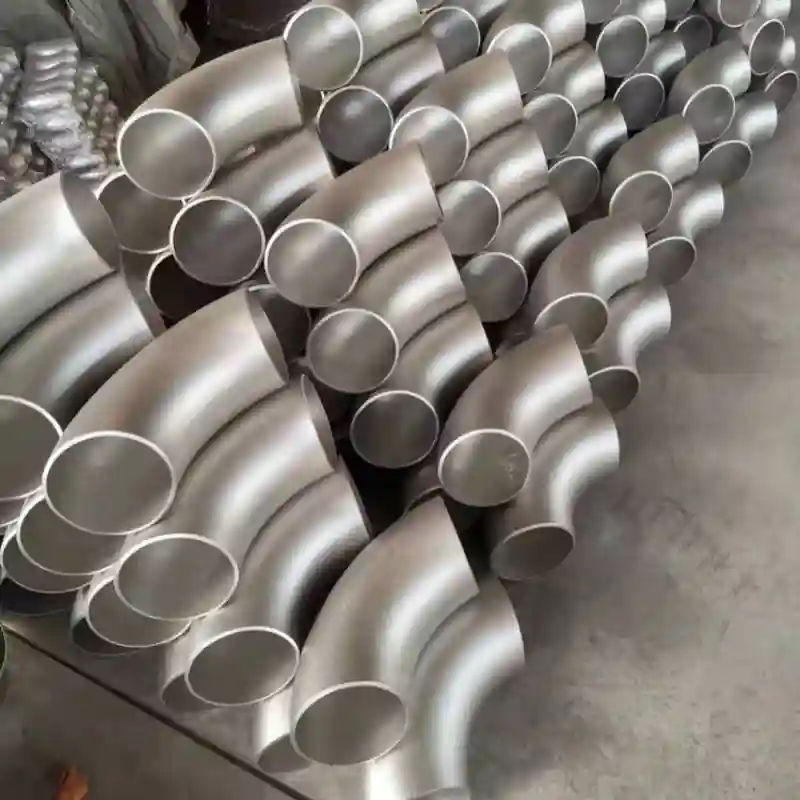
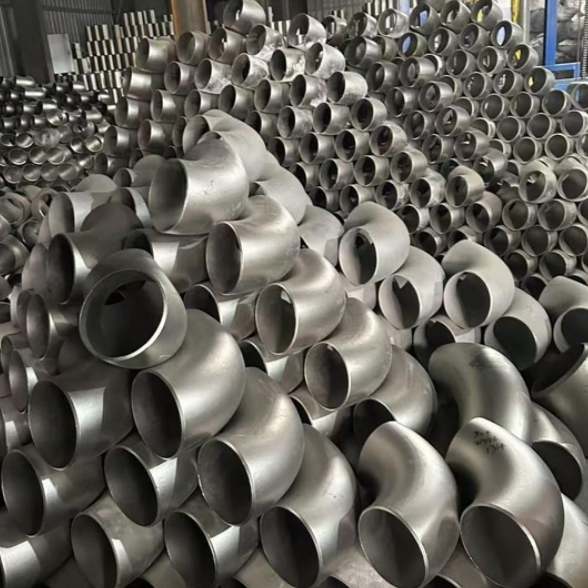
Even with perfect design, a lack of stock can halt a project. We keep a large quantity of stainless steel high pressure pipe fittings in stock, covering common sizes from 1/4 inch to 2 inches. Our smart warehouse system updates inventory in real time: currently, we have over 8,000 pieces of Class 3000 304/304L elbows in stock, and more than 2,500 pieces of Class 6000 316L tees, crosses, etc. For threaded products, special types such as left-hand threads and NPTF dry-seal threads are also maintained in safety stock.
From receiving an inquiry to providing a technical solution, we commit to a response within 4 working hours. For domestic regular orders, shipment can be made within 24 hours. For urgent overseas projects, we have priority channels with DHL and FedEx to ensure that stainless steel high pressure pipe fittings are delivered to major international airports within 72 hours.
V. Quality Control: “Digital Footprints” at Every Step
We are certified under both ISO 9001:2015 and IATF 16949 (automotive high-pressure fitting standard). On the manufacturing side, each batch of forging stock undergoes Optical Emission Spectroscopy (OES) to verify element content. During machining, thread accuracy is spot-checked using a Coordinate Measuring Machine (CMM), with critical dimensional tolerances controlled within ±0.05mm. Finished products are tested for air tightness according to MSS SP-119 – submerged in water and pressurized to 1.1 times the maximum working pressure, with observation for at least 2 minutes; no continuous bubbles are allowed.
Based on over 8 years of industry service experience, 70% of the failure cases we have handled were caused by users selecting non-standard pressure ratings or inferior materials. Choosing a reliable stainless steel fittings suppliers is essentially insuring the entire life cycle of your piping system.