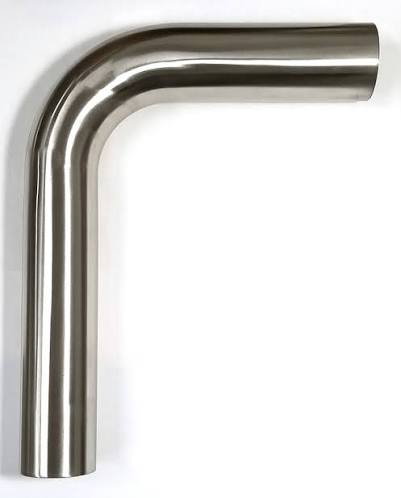
Stainless Steel Tubing Bends with Controlled Geometry
Stainless steel tubing bends with controlled geometry. Compare Tube OD, wall thickness, bend angle, CLR, tangent lengths, bend plane, ovality, and finish.
Description
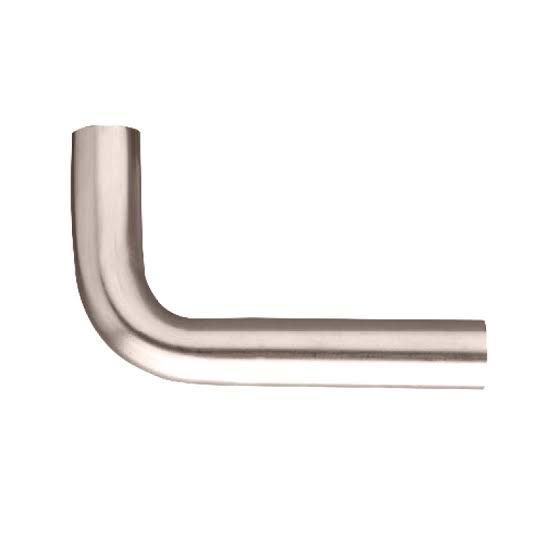
stainless steel tubing bends are formed by bending continuous tubing to change direction while retaining an integral tube wall and tangent sections at both ends. This page covers Tube or Pipe Bends custom-formed to drawings and does not treat them as fully equivalent to standard short-tangent Elbows.
Tube Bend Coordinate Data Sheet
| Item | Requirement |
|---|---|
| Tube / Pipe Size | Specify actual Tube OD or NPS and Schedule separately |
| Bend Angle | Single-bend angle or multiple-bend sequence |
| CLR | Centerline Radius and tolerance |
| Tangent Lengths | Straight lengths before and after the bend |
| Bend Plane | Clocking, rotation direction, and plane changes between multiple bends |
| Forming Limits | Ovality, wall thinning, wrinkle, and surface requirements |
4″ stainless steel tubing bends
A 4 inch Tubing Bend should normally be understood as an actual 4.000 inch OD, but the Tube size definition still needs confirmation. Larger outside diameter and heavier wall thickness affect available equipment, die radius, and forming method. The purchase drawing should also provide CLR, bend angle, tangent lengths at both ends, and allowable ovality rather than stating only outside diameter and 90°.
3 inch stainless steel pipe bends and 3″ stainless steel pipe bends
These two terms generally express the same search intent, but a Pipe Bend should be defined by NPS and Schedule. A 3 inch NPS does not equal a 3.000 inch actual outside diameter. The inquiry should state the material specification, Schedule, end form, and whether subsequent beveling is required so that a Pipe Bend is not manufactured using a Tube OD definition.
4 inch stainless steel pipe bends
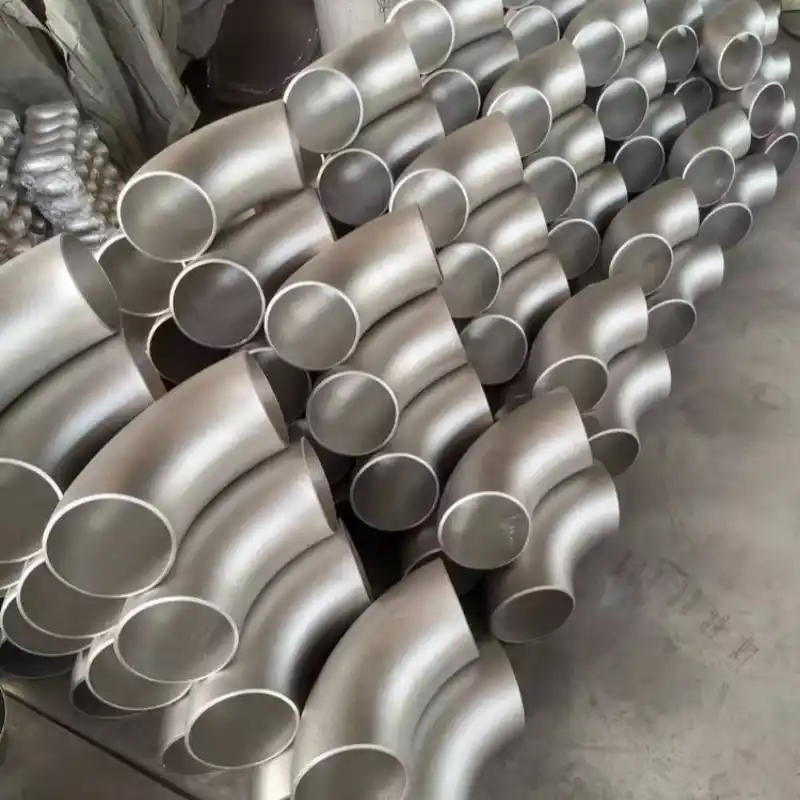
Large Pipe Bends may be cold formed, hot formed, or produced by another project-approved forming route. Different processes affect wall thinning, outer-radius stretching, inner-radius wrinkling, and heat-treatment requirements. When a supplier proposes a change in forming route, dimensions, tolerances, material condition, and the inspection plan should be reconfirmed.
stainless steel pipe bends suppliers
When requesting a quotation from suppliers, the drawing should identify bend start and end points, CLR, Tangent Length, angle, and Clocking, together with quantity and inspection requirements. For multi-bend parts, the center distance and three-dimensional coordinates between bends should also be provided. Site photographs alone do not establish a reproducible dimensional datum.
stainless steel bends elbows
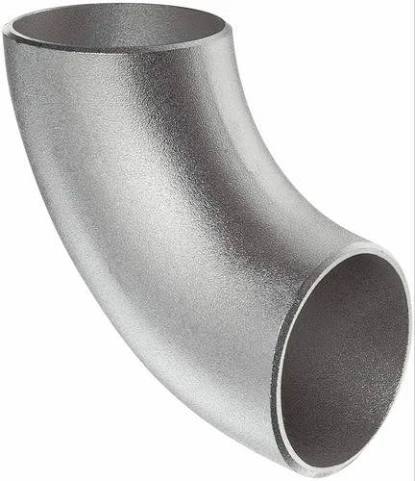
A Bend is normally formed from continuous tube or pipe, while an Elbow is normally a separate fitting. They may differ in tangent ends, manufacturing route, dimensional datums, and field connection method. A substitution should trigger renewed review of total assembly length, support locations, and weld count. The same angle and nominal size do not make them directly interchangeable.
Bending Sequence, Springback, and First-Article Verification
Before forming, confirm the material batch, outside diameter, wall thickness, and tooling, and establish the Clocking datum for multi-bend parts according to the drawing sequence. After bending, measure the actual angle, CLR, endpoint coordinates, and tangent lengths, and inspect Springback, ovality, wall thinning, wrinkle, and surface scratching. Batch production should retain measurement records for the first article and the current production lot.
stainless steel tubing bends Specifications
| Parameter | Specification |
|---|---|
| Product Name | Stainless Steel Tubing Bends |
| Product Type | Custom Formed Tube or Pipe Bend |
| Size Definition | Actual Tube OD or NPS and Schedule, specified separately |
| Bend Angle | Single or multiple bends according to drawing |
| CLR | Centerline Radius and tolerance specified by drawing |
| Tangent Lengths | Straight lengths before and after each bend |
| Bend Plane | Clocking and plane changes defined by drawing or coordinates |
| Material | 304 or 316 Stainless Steel common configurations; exact grade subject to order confirmation |
| Forming Method | Cold bending, hot bending or other approved method, subject to size and project requirements |
| Forming Quality | Ovality, wall thinning, wrinkle, flattening and surface condition by inspection plan |
| End Preparation | Square cut, bevel or other end form according to assembly drawing |
| Inspection Items | OD, wall thickness, angle, CLR, coordinates, tangents, ovality and surface review |
| Customization Boundary | Size, angle, CLR, tangent, plane, grade, end form and inspection, subject to technical review |
Frequently Asked Questions (FAQ)
1. Can stainless steel bends with the same outside diameter and angle be directly interchanged?
No. CLR, wall thickness, Tangent Length, bend plane, end form, and forming deviation must also be checked. Multi-bend parts additionally require comparison of endpoint coordinates and Clocking; outside diameter and angle alone are not enough to determine interchangeability of stainless steel tubing bends.
2. What is the difference between a Tubing Bend and a standard Elbow?
A Tubing Bend is normally formed directly from continuous tubing and retains tangent sections, while a standard Elbow is usually a separate fitting connected into the piping system. Their total length, weld count, dimensional datums, and manufacturing methods may differ, so selection should follow the drawing and system layout.
More Products