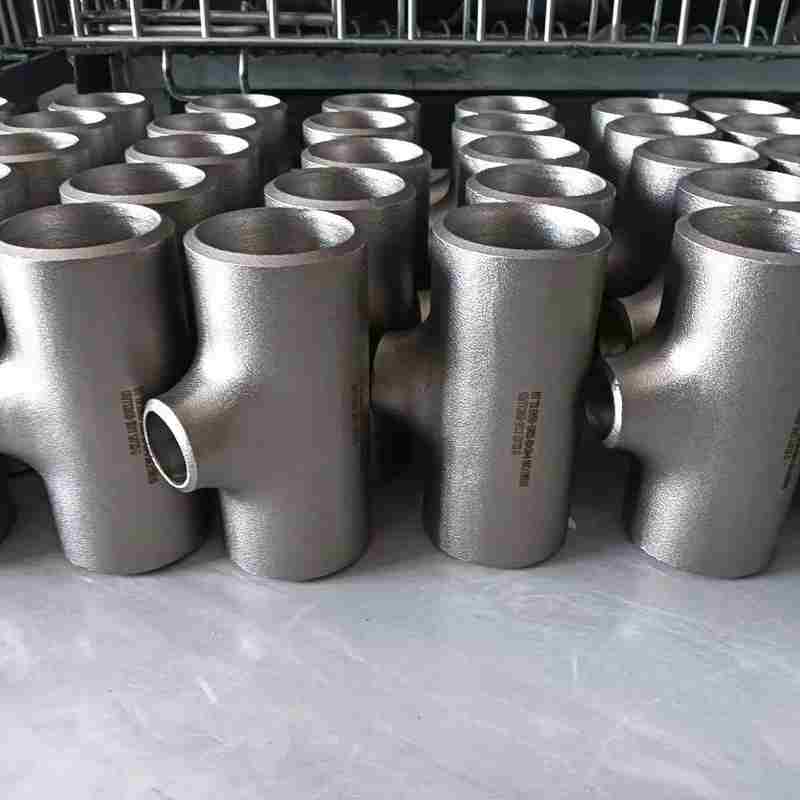
Stainless Steel Reducing Tee | High Strength & Corrosion Resistant
Discover premium stainless steel reducing tee for pipeline transitions. Excellent pressure rating, leak-proof threads, and durable finish. Request a quote today!
Description
Stainless Steel Reducing Tee | High Strength & Corrosion Resistant
Material & Manufacturing Process of Stainless Steel Reducing Tee
With the addition of molybdenum, 316L delivers significantly better resistance to chloride pitting corrosion than 304, making it more suitable for marine climates or salt-containing medium environments.
The inner wall is smooth and burr-free, and the outer surface is treated with pickling and passivation to restore the native oxide film, boosting corrosion resistance service life by over 30%.
Specification, Connection & Pressure Parameters
- Size Range: Mainstream specifications cover DN15×DN15×DN10 to DN200×DN200×DN100 (Inch: 1/2″×1/2″×3/8″ to 8″×8″×4″), and customized oversized dimensions are available.
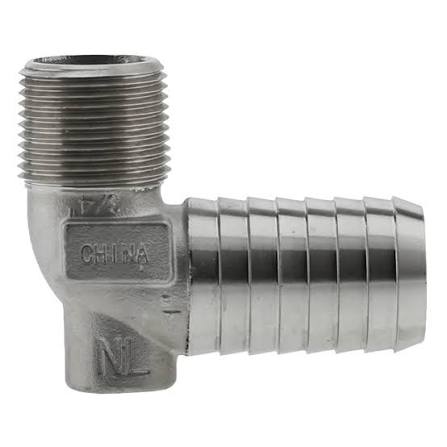
- Connection Type: Three connection types are provided: Butt Weld (BW), Socket Weld (SW), and stainless steel threaded reducing tee. Thread standards comply with NPT, BSPT or BSPP. Tapered threads can achieve high-pressure leak-tight sealing with PTFE tape or thread sealant.
- Pressure Rating: Applicable to Sch10, Sch40, Sch80 and Sch160 wall thickness schedules, corresponding to pressure classes from 150# to 2500#. For reference, 316 stainless steel tees in Sch40 can reach a maximum working pressure of 19.6MPa (2840psi) at ambient temperature.
Features & Technical Advantages of Stainless Steel Reducing Tee
- Integrated structure cuts two circumferential welds compared with combined assemblies of reducer plus equal tee, lifting installation efficiency by around 40%.
- The internal transition section adopts a large curvature radius design, reducing turbulent flow loss by 15%~20% versus traditional welded structures for outstanding energy-saving performance.
- It passes intergranular corrosion testing in accordance with ASTM A262 Method E, and can operate continuously for more than 10 years without pitting corrosion in media with chloride ion content ≤200ppm and a pH range of 4 to 10.
Technical Parameters of Stainless Steel Reducing Tee
| Parameter Item | Typical Value / Range | Remarks |
|---|---|---|
| Material Grade | 304/304L, 316/316L, 321, Duplex Steel 2205 | Manufactured per ASTM/EN Standards |
| Connection Method | BW, SW, Thread (NPT/BSPT) | BW is the most common for ss reducing tee |
| Nominal Diameter DN | 15×15×10 – 200×200×100 | Custom reduced × reduced diameter sizes available |
| Wall Thickness Schedule | Sch10S, Sch40S, Sch80S | Matched with different pressure levels |
| Operating Temperature | -196℃ ~ +450℃ | 304 is applicable for low temperature down to -196℃ |
| Maximum Working Pressure | ≤25MPa (3625psi) @ Ambient Temperature | 316L Sch160 |
Application of Stainless Steel Reducing Tee
- Chemical Plant Pipe Rack: Stainless reducing tee diverts process medium from DN100 main pipelines to DN50 reactor feed lines, eliminating leakage risks caused by flange connections.
- Seawater Cooling System: 316L-grade stainless steel unequal tee with a main diameter of DN150 and branch port of DN80 meets the large-flow bypass demand for cooling water.
- Pharmaceutical Purified Water System: Sanitary-grade tees with inner surface polishing Ra≤0.4μm inhibit biofilm growth. ss reducing tee is widely specified in engineering projects to meet GMP cleanliness standards.
- Oil & Gas Gathering and Transportation: High-pressure stainless steel threaded reducing tee supports rapid maintenance and replacement without hot work operations.
Q&A
A: Stainless steel reducing tee made of 321 or 347 titanium/niobium stabilized stainless steel is recommended to avoid intergranular corrosion during long-term operation in the sensitization temperature range of 450℃~850℃. For working pressure above 2.5MPa, butt weld type is preferred to prevent cracking induced by stress concentration at threaded connections.
A: Integrally forged stainless steel unequal tee has no inner steps or gaps at bushing connection points, preventing medium retention. It is ideal for sanitary service or slurry transportation with solid particle content. Despite a slightly higher unit cost, it greatly cuts installation working hours and hidden leakage hazards, delivering a lower overall life cycle cost.
More Products