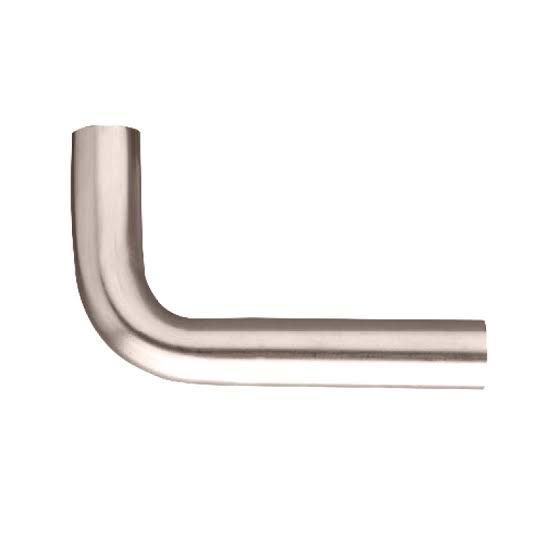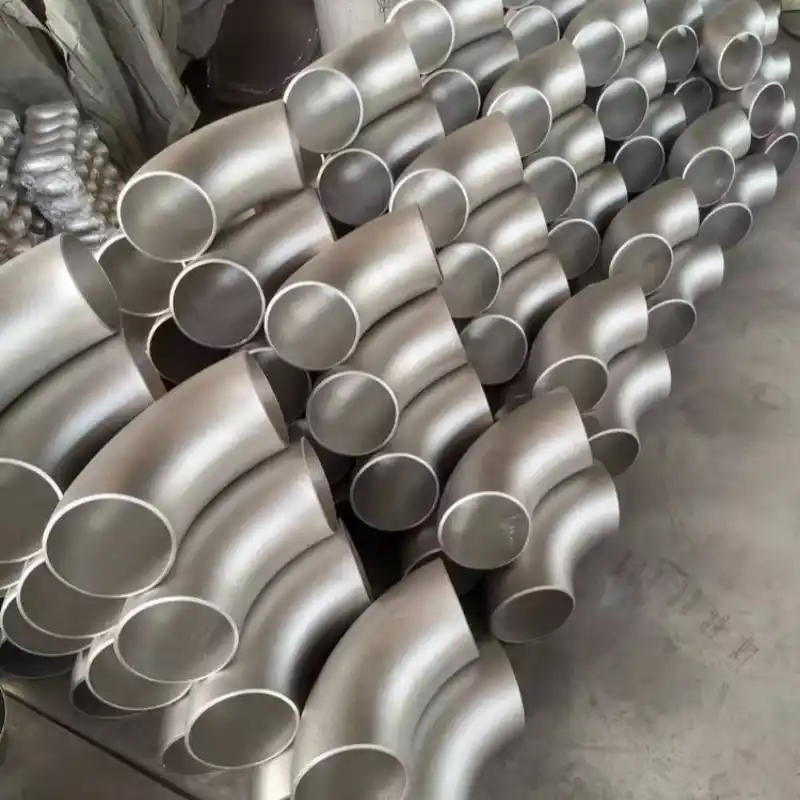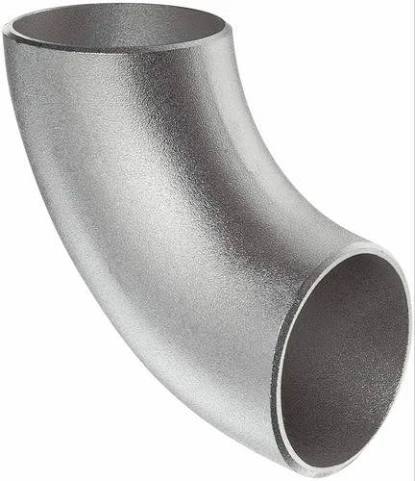
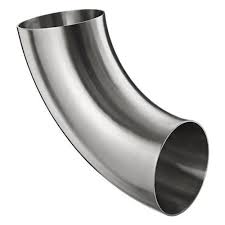
Stainless Steel Long Radius Elbow Dimensions
Stainless steel long radius elbow for controlled pipe routing. Confirm radius, center-to-end dimensions, schedule, weld ends, grade and drawing before quotation.
Description
A long radius stainless steel elbow is used where a smoother turn, a larger centerline radius, or more room for welding and fit-up is needed. During procurement, do not look only at “90 degree.” Confirm the bend radius, center-to-end dimensions, tube outside diameter, and wall thickness as well. Near pumps, heat exchangers, tanks, or equipment nozzles, a radius change affects layout space and field fit-up.
Start Dimension Checks at the Centerline
The quotation should place nominal size, outside diameter, wall thickness or Schedule, bend angle, and center-to-end dimension on the same dimensional card. Long Radius and Short Radius are not just naming differences; the drawing, piping class, and manufacturer catalog must use the same basis. If the project controls the centerline radius or end coordinates, attach a drawing for confirmation instead of relying on the product title.
Material and End Preparation Determine Suitability
The stainless steel grade must be confirmed together with the medium, temperature, welding procedure, and matching straight pipe. The bevel, end preparation, and wall-thickness match at a butt-weld end affect fit-up. For a custom elbow, also confirm the forming route, heat-treatment requirements, and material certificates. The quotation may be based on 304, 316, or a project-specified grade, but no single grade should be treated as the default for every service.
Ordering and Receiving Dimension Card
When ordering a long radius elbow, place the angle, centerline radius, center-to-end dimension, outside diameter, wall thickness, end type, and dimensional standard on the same drawing. If the connecting straight pipe uses a Schedule or project-specific wall thickness, the elbow end must match it. Also confirm the bend plane, support space, welding access, and lifting direction.
If a supplier provides only abbreviations such as “LR” or “1.5D,” confirm the standard and measurement method behind the term. Centerline and end dimensions from different manufacturers cannot be applied interchangeably. On receipt, check the angle, radius, end ovality, weld-end protection, and identification rather than relying only on appearance or the package label.
The centerline radius affects pipe-rack length, adjacent weld locations, and maintenance clearance around equipment. The drawing should show the bend angle, centerline radius, both center-to-end dimensions, and bend plane together. If only the outside diameter and angle are supplied, the supplier still cannot determine which end dimensions define the long-radius configuration.
For a butt-weld long radius elbow, also confirm the end bevel, wall-thickness transition, ovality, and nominal size of the matching straight pipe. Measure the received part against the same dimensional datum. Do not treat “LR” on a package label as a complete dimensional certificate; if the returned drawing does not fit the site space, resolve the layout or model before fit-up.
When the elbow is near equipment, instruments, or supports, the order drawing should also show flange faces, weld locations, and the removal direction. This keeps dimension selection, field fit-up, and later maintenance on one path and reduces the chance of discovering insufficient space after delivery.
The dimensional drawing should state the measurement origin and both end reference faces, especially for non-standard angles or custom lengths. Putting these fields together with grade, wall thickness, and quantity allows procurement to compare the actual configurations offered by different manufacturers.
Dimension Card: Key Long Radius Fields
- Bend angle: State 90 degrees or another angle; do not merge angle and radius into one field.
- Radius definition: State Long Radius, centerline radius, or the drawing reference, and attach the dimensional drawing.
- End dimensions: Record center-to-end, overall length, and both fit-up datums.
- Pipe match: Confirm outside diameter, wall thickness, or Schedule against the matching straight pipe.
- Documents: List material certificates, dimensional inspection, and any required welding documents in the order.
Product Parameters
| Parameter | Review Specification |
|---|---|
| Bend angle | Confirm against the drawing or quotation; common angles do not replace the ordered angle. |
| Radius type | Long Radius; the exact centerline radius is subject to the dimensional drawing. |
| Nominal size / outside diameter | Confirm against the matching piping class. |
| Wall thickness / Schedule | Confirm against the piping class or straight-pipe specification. |
| Material | 304, 316, or a project-specified grade; confirm the material standard. |
| Ends | Butt-weld ends or the specified order configuration; confirm bevel and end preparation. |
| Surface | Confirm against the manufacturer process and receiving requirements. |
| Inspection documents | Dimensional records, material certificates, and project-specific documents. |
| Supporting documents | Dimensional drawing, quantity, packaging, and delivery details are subject to quotation. |
Frequently Asked Questions (FAQ)
Is a long radius elbow always better than a short radius elbow?
Not always. It usually needs more layout space and is useful where a smoother turn or more fit-up room is needed. The final choice should follow the piping layout, pressure-loss requirements, and project dimensional standard.
Can I request a quotation using only “stainless steel long radius elbow”?
It is not recommended. Add the size, angle, wall thickness, grade, end type, quantity, and required documents so the supplier can quote the same configuration.
More Products