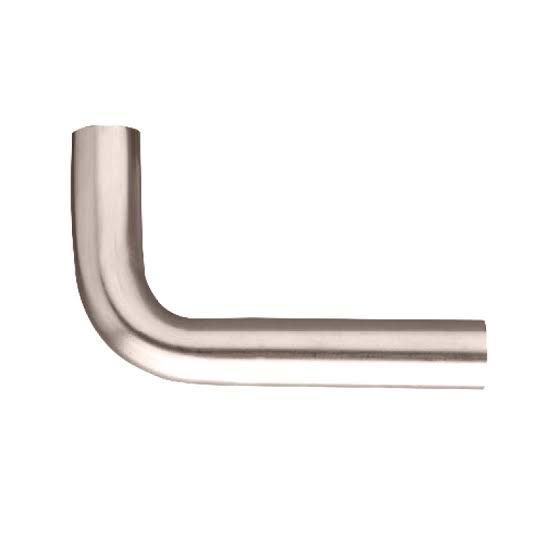
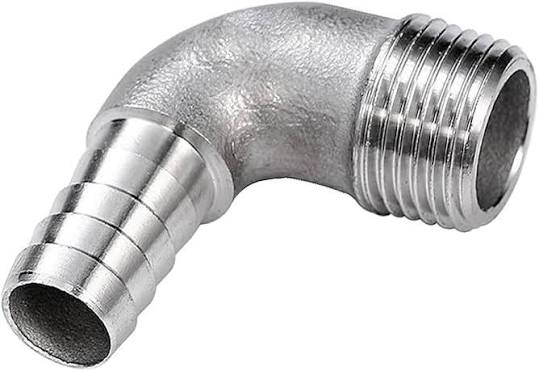
Stainless Steel Hose Barb Elbow for 90° Hose Routing
Stainless steel hose barb elbow for 90° hose routing. Compare Hose ID, barb profile, male thread size, clamp or ferrule, material, dimensions, and assembly.
Description
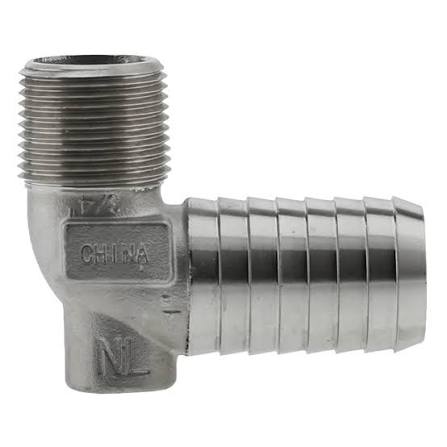
stainless steel hose barb elbow is used to route a hose through 90° in limited spaces and connect it to a threaded port on equipment or piping. A common manufacturer configuration is Male NPT x Hose Barb, but procurement should separately confirm Hose ID, barb profile, Male Thread Size, material, and retention method.
stainless barbed elbow and stainless steel barbed elbow
These two terms describe the same type of barbed elbow. Selection should begin with Hose ID and hose construction, followed by verification of barb crest diameter, root diameter, effective insertion length, and end shape. Hoses with the same Hose ID may have different inner layers, reinforcement structures, and allowable expansion, so the fitting should not be ordered only from a measurement of the free-state inside diameter.
male ss elbow
Male Thread Size and Hose ID are independent fields. The inquiry should state NPT, NPTF, or another thread system and should confirm nominal size, threads per inch, and sealing method. When the elbow outlet orientation is fixed, also verify that the hose end reaches the required position after the thread is tightened.
stainless steel elbow hose fitting
The hose-barb end is commonly used with a hose clamp or crimped ferrule. Clamp type, quantity, crimp diameter, and tooling should follow the hose-assembly system documents. Pressure and temperature capability is limited by the lowest applicable value among the hose, fitting, retention component, and service conditions and cannot be determined from the stainless steel body alone.
stainless steel hose barb elbow Installation Sequence
First cut the hose square and confirm that no layer separation is present, then push the hose to the specified insertion position. Place the clamp or ferrule in the area specified by the system, avoiding the end of the barb or the edge of the hose. After securing the connection, check hose twist, minimum bend radius, and the threaded-end sealing condition.
How to Inspect a Hose Elbow at Receipt
The receiving record should list Hose ID, Male Thread Size, barb quantity and geometry, centerline dimensions, material, and part number separately. When a reusable clamp is used, confirm the reassembly rules. When a crimped ferrule is used, verify the crimp specification and tooling. The two retention methods cannot be interchanged based only on appearance.
stainless steel hose barb elbow Specifications
| Parameter | Specification |
|---|---|
| Product Name | Stainless Steel Hose Barb Elbow |
| Product Type | Male NPT x Hose Barb 90 Degree Elbow, common manufacturer configuration |
| Hose Size | Hose ID specified by order and matching hose system |
| Thread Type | NPT, NPTF or other thread system, subject to order confirmation |
| Male Thread Size | Specified separately from Hose ID; exact thread designation required |
| Material | 316 Stainless Steel common manufacturer configuration; actual grade subject to order confirmation |
| Barb Profile | Multiple-barb configuration common; crest diameter, groove geometry and insertion length by drawing |
| Retention Method | Hose clamp or crimped ferrule according to the approved hose assembly system |
| Centerline Dimensions | Height and length centerline dimensions confirmed by product drawing |
| Mating Hose | Hose ID, material, wall construction and reinforcement compatible with the fitting system |
| Pressure / Temperature | Determined by the complete hose, fitting, clamp or ferrule and service condition |
| Inspection Items | Visual, dimensional, barb-profile, thread-gauge, marking and component review |
| Customization Boundary | Hose ID, thread size, material, barb geometry, marking and documents, subject to system review |
Frequently Asked Questions (FAQ)
1. Can a 1/2 inch Hose ID be directly matched with a 1/2 inch Male Thread?
This cannot be determined from the two nominal values alone. Hose ID describes the hose inside diameter, while Male Thread Size describes the nominal thread size. They may be the same or different. The procurement sheet must list the two fields separately and confirm the specific combination against the fitting drawing.
2. Why can a stainless steel hose barb elbow not be judged only by the number of barbs?
Retention and sealing also depend on barb geometry, insertion length, hose construction, clamp or ferrule position, assembly tooling, and service conditions. The inquiry should provide the hose specification and retention method before the stainless steel hose barb elbow is confirmed.
More Products