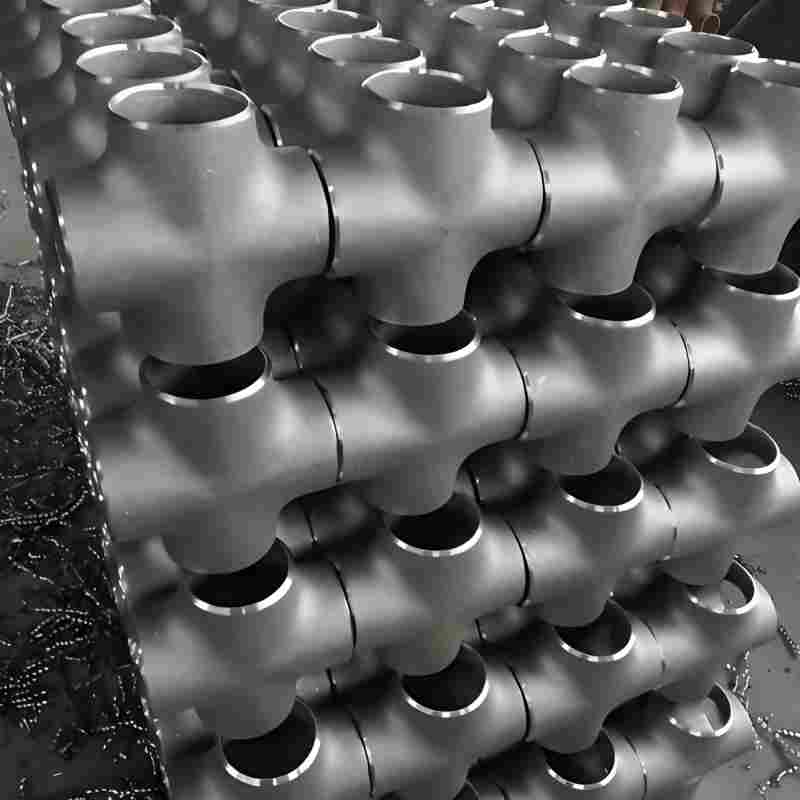
Pipe Cross for Efficient Pipeline Distribution – Durable
Discover high-quality pipe cross fittings for complex piping networks. Ideal for industrial, water, and oil systems. Ensure leak-proof connections. Contact us for bulk pricing!
Description
Pipe Cross for Efficient Pipeline Distribution – Durable
Material & Manufacturing Standards
Specifications & Connection Types
- Nominal Diameter: DN15 – DN600 (1/2″ – 24″)
- Wall Thickness Schedule: Sch 5S, Sch 10S, Sch 40, Sch 80
- Connection Type: Butt Weld (BW), Threaded (NPT/BSPT), Socket Weld (SW)
- Pressure Class: Up to Class 3000 (Threaded / Socket Weld)
Technical Parameter Table of Pipe Cross (Stainless Steel Butt Weld Cross for Reference)
| Size (Inch) | Outer Diameter (mm) | Center to End (mm) | Wall Thickness (mm) | Pressure Class (Class) |
|---|---|---|---|---|
| 1 | 33.4 | 76 | 3.38 | 150 |
| 2 | 60.3 | 114 | 3.91 | 150 |
| 3 | 88.9 | 152 | 5.49 | 150 |
| 4 | 114.3 | 191 | 6.02 | 150 |
Pipe Cross Application Scenarios
- Chemical Piping: Multi-directional liquid inlet systems for neutralization towers
- Fire Sprinkler Systems: Synchronized water spraying at cross pipeline intersections
- HVAC Systems: Four-way water collection and distribution for chilled water and cooling water
- Oil & Gas Industry: Wellhead assemblies and gathering manifold systems
Common Purchaser FAQs
Q1: Can a stainless steel cross tee be used in high-temperature steam systems?
A: Yes, but proper material grade selection is mandatory. For continuous steam operation at temperatures up to 550°C, we recommend 316L stainless steel cross tee with solution-annealed treatment. Please refer to ASME B16.34 for accurate pressure-temperature rating verification. Our technical team can provide detailed pressure de-rating charts upon request.
Q2: What is the difference between a reducing cross fitting and a standard cross fitting?
A: A standard cross fitting comes with four outlets of identical dimensions (e.g., 2″×2″×2″×2″). A reducing cross fitting has at least one branch outlet with a smaller caliber (e.g., 2″×1″×2″×1″). This integrated design eliminates the need for additional reducer fittings, reduces overall installation expenses and lowers potential leakage points. For example, a 1 inch cross pipe fitting equipped with two 1/2″ outlets is widely adopted in instrument air distribution systems.
More Products