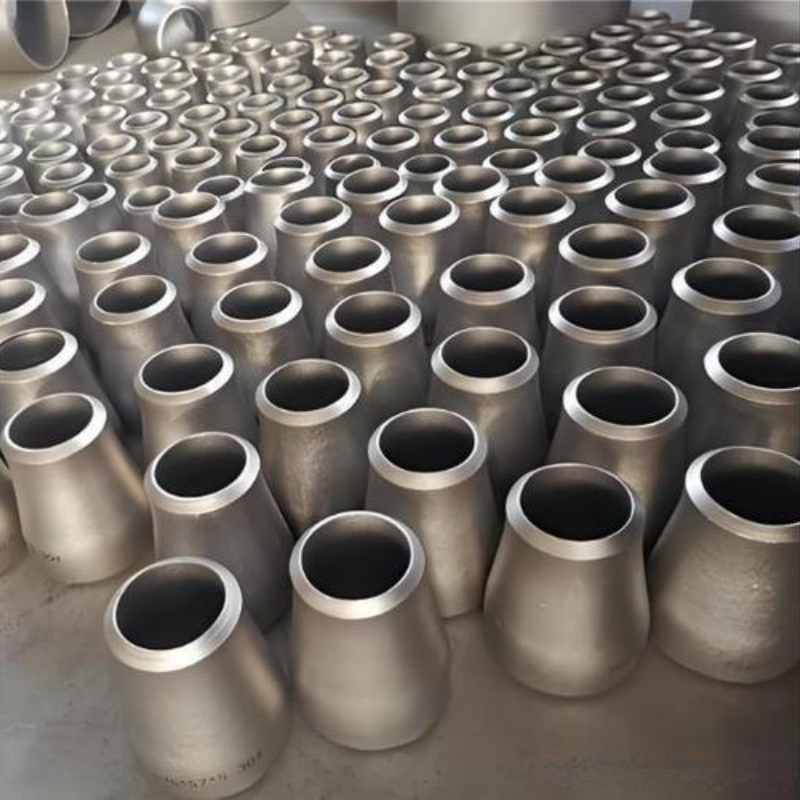
Concentric Pipe Reducer for Uniform Flow – ASME B16.9
High-quality concentric pipe reducer for smooth diameter transitions. ASME B16.9, seamless & welded. Stainless steel, carbon steel. Reduce turbulence, maintain centerline. Request a quote today!
Description
Concentric Pipe Reducer for Uniform Flow – ASME B16.9
Material, Specification and Pressure Class
| Attribute | Optional Range / Standards |
|---|---|
| Material | Stainless steel (304/304L, 316/316L), carbon steel (ASTM A234 WPB), alloy steel (WP11, WP22) |
| Manufacturing Process | Seamless (≤24″), Welded (≥26″) |
| Size Specification | 1/2″ × 3/4″ to 48″ × 42″, common size including 6″ x 3″ concentric reducer |
| Wall Thickness Schedule | Sch10, Sch20, Sch40, Sch80, Sch160, XXS |
| Pressure Class | Class 150, Class 300, Class 600, Class 900, Class 1500, Class 2500 |
| Execution Standard | ASME B16.9, MSS SP-43, EN 10253-2 |
Application Scenarios of Concentric Pipe Reducer
- Oil & Gas: Gathering and transmission pipelines, metering skids, realizing stable pressure reduction to protect instrumentation.
- Chemical & Pharmaceutical: Stainless steel types are applied for conveying acid, alkali and high-purity media; the concentric structure eliminates dead corners.
- Water Supply & Seawater Desalination: Large-size welded reducer connects pump outlets and main pipelines to reduce cavitation.
- Food & Beverage: Inner surface polished to Ra≤0.6μm, featuring easy cleaning and no medium residue.
Why Choose AIFN Concentric Pipe Fittings?
Frequently Asked Questions (FAQ)
A: Yes, but caution is needed. Concentric reducers maintain centerline alignment and work well in horizontal lines with clean, low-viscosity fluids. However, for slurries or liquids that may contain gas pockets, an eccentric reducer (flat side down) is recommended to avoid air accumulation. Always refer to piping design standards (e.g., ASME B31.3) for fluid-specific guidance.
A: “Weld reducer” typically refers to a fabricated reducer formed from welded plate (often used for larger diameters >24″), while seamless reducers are forged from a solid billet (available up to 24″). Seamless types offer uniform grain structure and higher pressure integrity; welded reducers are more cost-effective for large sizes. Both comply with ASME B16.9 when properly manufactured.
More Products