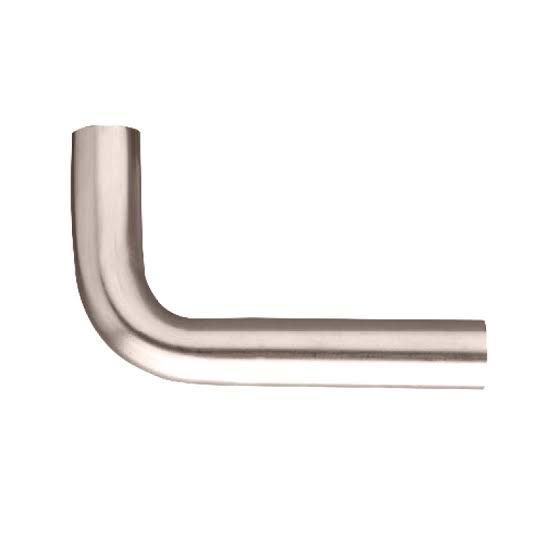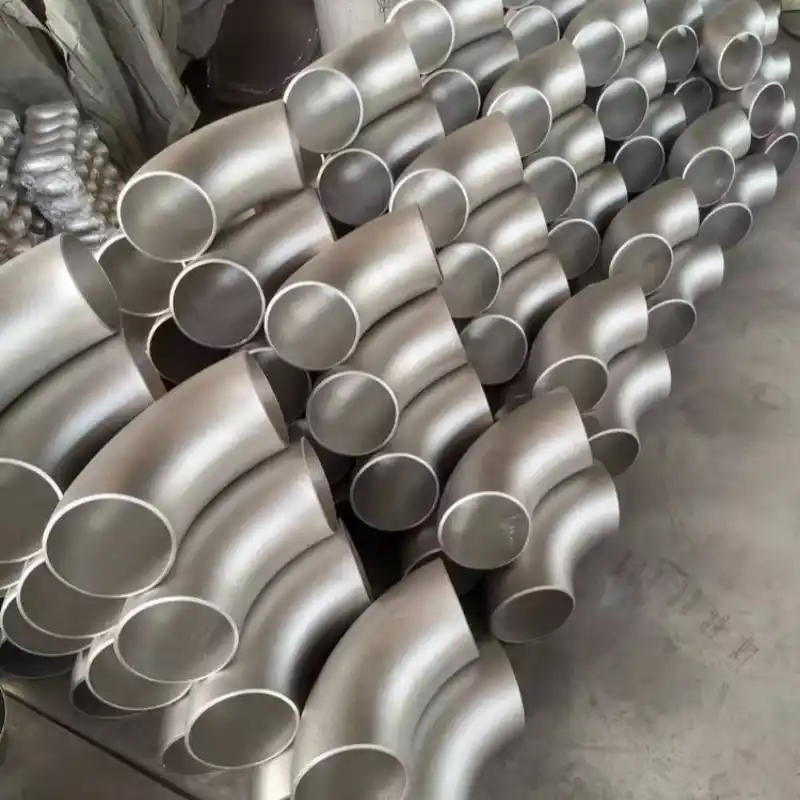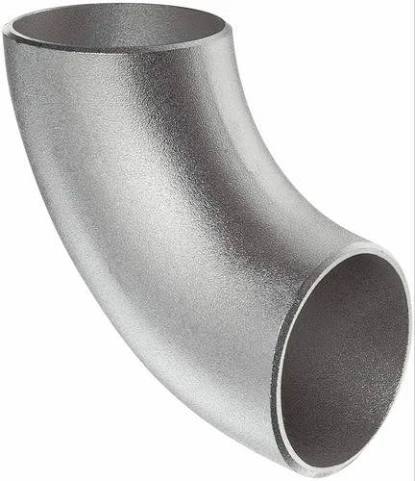
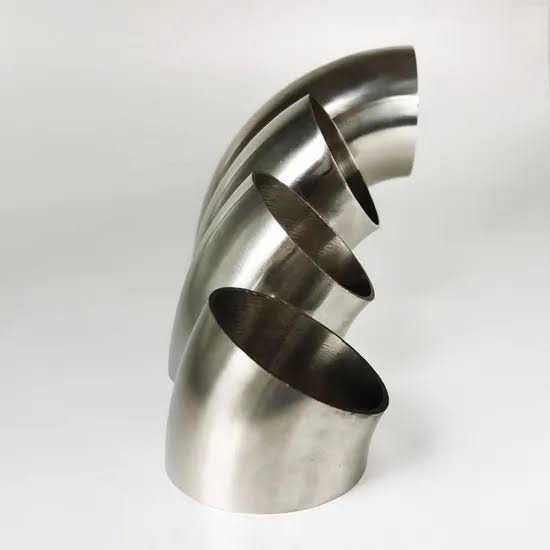
22.5 Degree Stainless Steel Elbow Selection Guide
22.5 degree stainless steel elbow for controlled pipe offsets. Review angle, centerline radius, tube OD, wall thickness, weld ends and alignment before ordering.
Description
A 22.5 degree stainless steel elbow is used for small-angle offsets, routing around a local obstruction, or adjusting an equipment connection. Its value is a controlled change of direction, not a universal replacement for every 45 or 90 degree elbow. Procurement can start with three questions: Is the offset angle correct? Can both ends be fitted without forcing the pipe? Do the centerline dimensions fit the layout?
Confirm the Radius Alongside the Angle
Two elbows can both be 22.5 degrees while having different centerline radii, end dimensions, and forming methods. Put the angle, radius type, tube outside diameter, wall thickness or Schedule, and center-to-end dimension together in the quotation. If the project drawing gives coordinates or cut lengths, ask the supplier to return a drawing for confirmation instead of substituting by angle name alone.
Match Weld Ends and Material
A butt-weld elbow must match the outside diameter, wall thickness, grade, and welding procedure of the connected straight pipe. Material selection also depends on the medium, temperature, welding heat input, and cleanliness requirements. Similar product names do not prove that an elbow and straight pipe can be mixed. If the order requires material certificates or PMI, state the document scope and batch identification during quotation.
Angle Selection and Substitution Boundary
A 22.5 degree elbow is useful for a small offset, a local obstruction, or an equipment connection. Its difference from 45 and 90 degree elbows includes more than the angle: center-to-end dimension, bend plane, and field fit-up space also change. Whether two short pipes may replace a formed elbow depends on weld count, space, inspection, and project design; angle similarity alone is not enough.
Ordering and Field Fit-Up
The quotation should state angle, radius, pipe outside diameter, wall thickness, grade, end type, dimensional standard, and quantity. Before fit-up, confirm the bend plane, straight-pipe direction, welding access, and bevel condition. On receipt, check the angle, ends, wall thickness, and identification. Do not correct an angle or plane mismatch by forcing the assembly.
If the project requires PMI, material certificates, or welding documents, list the batch and document scope in the order. If the supplier returns only a general catalog number, request the dimensional drawing so the 22.5 degree search term is not mistaken for a complete specification.
The center-to-end dimension of a small-angle elbow can directly affect an equipment nozzle and support location. The purchase drawing should show both straight-pipe directions, the angle datum, bend plane, and end condition. For a butt-weld end, state the bevel or plain-end requirement to avoid repeated cutting during alignment.
If the 22.5 degree angle only routes around a local obstruction, check whether an alternative would add welds, move supports, or reduce maintenance clearance. Receiving measurements should record actual angle, center dimensions, wall thickness, and batch. Handle deviations against the drawing rather than hiding them through forced fit-up.
For thin-wall pipe, clean pipe, or special welding work, also confirm formed wall thickness, end preparation, internal-surface protection, and welding documents. The 22.5 degree value describes the turn; it does not replace these manufacturing and installation fields.
If the elbow is located in a narrow rack or behind equipment, confirm tool access and weld-inspection space. A small angle does not remove the need for supports and inspection; the bend plane and adjacent straight-pipe direction should be fixed before installation.
Small-Angle Fit-Up Card
- Angle: Put 22.5 degrees in the drawing number or order line so it is not replaced by a 45 degree item.
- Bend plane: Confirm both centerlines and the bend direction against the equipment drawing.
- Dimensional datum: Use center-to-end and outside diameter as the main check references.
- End condition: Confirm bevel, end cleanliness, and wall-thickness transition for welding.
- Deviation record: State the measurement method, allowable deviation, and responsibility in the receiving terms.
Product Parameters
| Parameter | Review Specification |
|---|---|
| Angle | 22.5°; angle tolerance is subject to the manufacturer drawing or project standard. |
| Radius | Centerline radius is subject to order confirmation; the angle name is not a radius specification. |
| Nominal size / outside diameter | Confirm against the matching straight pipe and piping class. |
| Wall thickness / Schedule | Confirm against the project specification. |
| Material | Project-specified stainless steel grade and material standard. |
| Ends | Butt-weld ends or the specified configuration; confirm bevel form. |
| Bend plane | Confirm against the isometric drawing or equipment connection direction. |
| Inspection | Angle, dimensions, appearance, and material documents are subject to order. |
| Packaging | End protection, identification, and delivery details are subject to quotation. |
Frequently Asked Questions
Can two short pipes be field-joined instead of using a 22.5 degree elbow?
Only if the project design, weld count, available space, and inspection requirements allow it. Do not change to a fabricated assembly because the angle looks close; obtain design or engineering confirmation.
Are the quotation details for a 22.5 degree and a 45 degree elbow the same?
The basic fields are similar, but angle, radius, and center-to-end dimension must be confirmed separately. A small-angle elbow especially requires a check of the bend plane and fit-up coordinates.
More Products