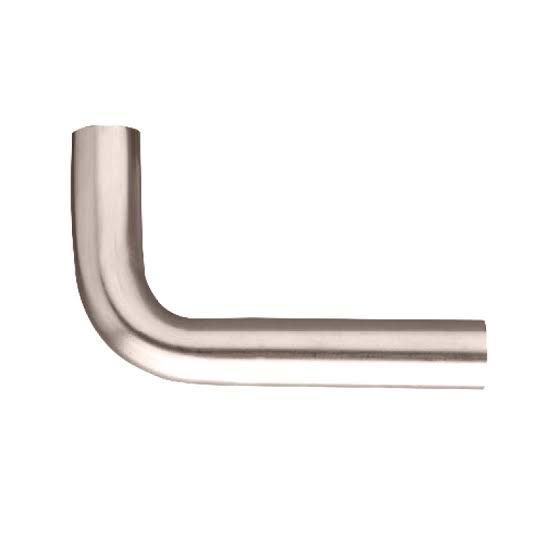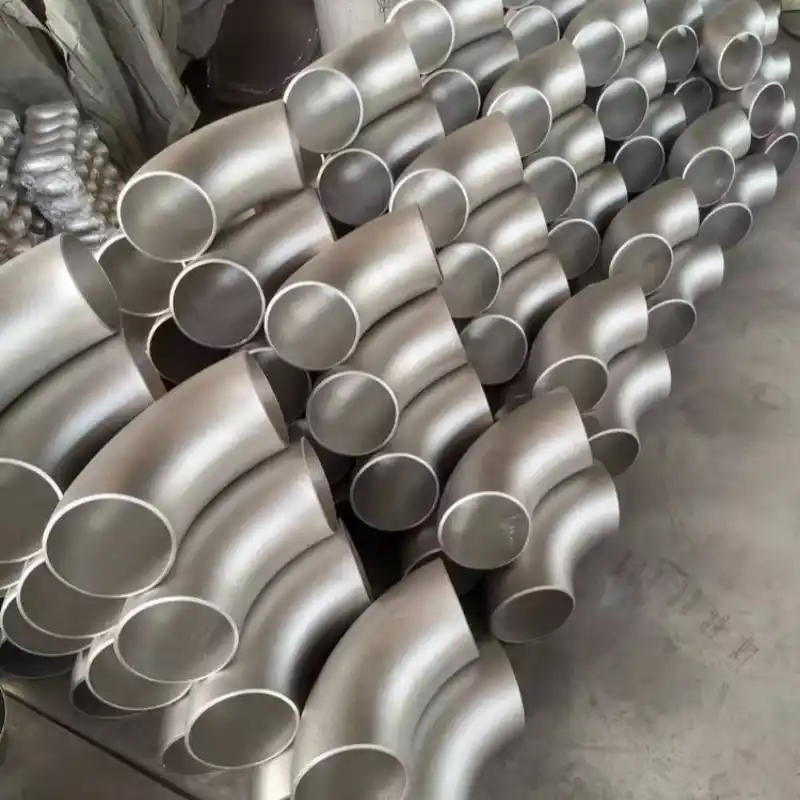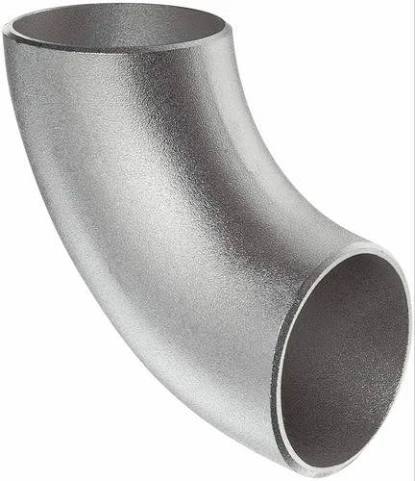
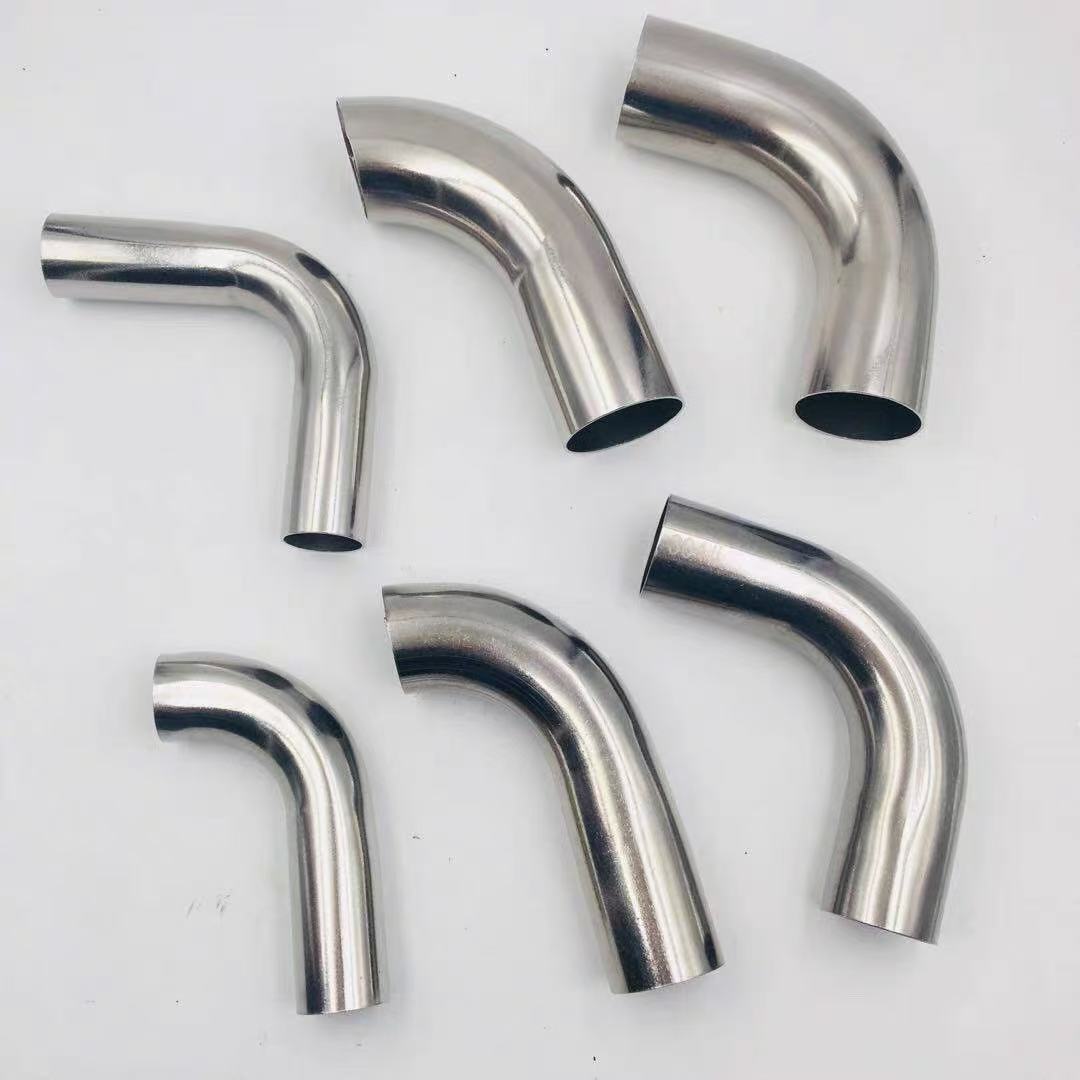
1 1/4″ Stainless Steel Elbow – Durable, Corrosion-Resistant
Explore our 1 1/4″ stainless steel elbow for heavy-duty piping. Available in 304/316L, threaded/welded. High pressure resistance. Fast shipping. Request a quote!
Description
In the piping systems of the chemical, food, and water treatment industries, the 1 1/4″ stainless steel elbow is a core component for changing fluid direction. This size (nominal diameter DN32) is extremely frequently used in small-to-medium bore process piping, and its material and manufacturing process directly determine the safe service life of the entire pipeline.
As a commonly used stainless steel pipe fitting elbow in piping systems, the 1 1/4″ elbow must not only withstand the scouring of fluid media but also cope with mechanical stresses from the installation environment. Therefore, it is crucial to select blanks that comply with ASTM A403 or ASME B16.9 standards.
Material & Manufacturing Process: More Than Just Rust Prevention
For different working conditions, we offer a variety of material choices ranging from 304/304L to 316/316L. For media containing chloride ions or requiring acid/alkali cleaning, the 316l stainless steel elbow – thanks to its molybdenum (Mo) addition – provides far superior pitting resistance compared to 304 grades.
Connection types: Our standard products cover two mainstream processes: stainless steel socket weld elbow (socket weld) and stainless steel butt weld elbow manufacturer (butt weld).
Manufacturing standards: Strictly implemented in accordance with GB/T 12459 or ASME B16.9, ensuring that wall thickness uniformity and roundness deviation are controlled within extremely tight tolerances.
Common Application Scenarios (Industry Cases)
The 1 1/4″ stainless steel elbow is an indispensable key fitting in the following scenarios:
-
Food & beverage production lines: In CIP (Clean-in-Place) systems, the internal surface roughness of the elbow directly determines cleanliness.
-
Pharmaceutical purified water systems: Requiring extremely short dead legs, our 1 1/4″ stainless steel elbow fully complies with the 3D standard (bending radius ≥ 3 times the pipe diameter).
-
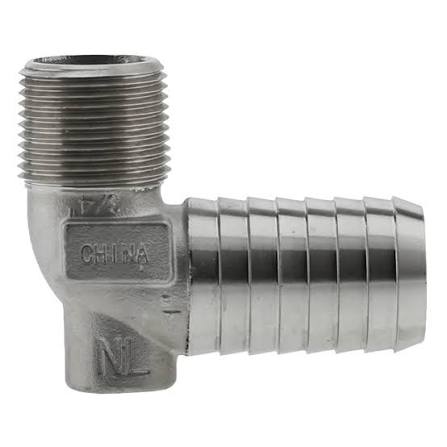
Fine chemical metering pipelines: Under high-pressure conditions, the stainless steel reducing female elbow (reducing female threaded elbow) can combine diameter reduction and directional change in one fitting, reducing weld point leakage risks.
Key Parameters & Selection Reference
To assist purchasers in quick selection, below are the critical design parameters for a standard 1 1/4″ elbow (based on ASME B16.9):
| Parameter | Specification |
|---|---|
| Nominal Pipe Size (NPS) | 1 1/4″ (DN32) |
| Bending Radius | Long Radius (LR): R=1.5D (approx. 48mm) / Short Radius (SR): R=1.0D |
| Wall Thickness Schedule | Sch 40S / Sch 80S (customizable upon request) |
| Common Materials | TP304/304L, TP316/316L, Duplex Stainless Steel 2205 |
| Manufacturing Process | Cold mandrel forming (Mandrel) or Hot pressing |
| End Bevel | Butt-weld ends machined per ASME B16.25 |
Professional Selection Advice
✔️In complex piping layouts, designers often need to use a 1″ stainless steel elbow (one‑inch elbow) with a reducer to transition to 1 1/4″, but if space is constrained, we strongly recommend directly using a reducing elbow instead.
✔️When handling high‑pressure steam or hazardous chemicals, we strongly advise using butt‑weld products from a stainless steel butt weld elbow manufacturer, because the butt‑weld structure eliminates stress concentration points found in threaded connections, and the leakage probability is far lower than that of threaded joints.
In addition, for workstations requiring frequent disassembly and maintenance, choosing a stainless steel socket weld elbow with a union design greatly facilitates future servicing. Although the initial purchase cost is slightly higher, the Life‑Cycle Cost (LCC) is lower.
Application Case: Nongfu Spring Zhejiang Production Base
✅At the Nongfu Spring Qiandaohu production base in Zhejiang, our 1 1/4″ stainless steel elbow products were used in a new aseptic filling line.
✅This production line has extremely stringent requirements for internal surface smoothness (Ra < 0.4μm) and passivation film integrity. At the initial stage of the project, elbows with excessive wall thickness negative tolerances were used on site, causing undercut and excessive misalignment during welding.
✅After replacing them with our 316l stainless steel elbow (with strictly controlled positive wall thickness tolerance), the X‑ray inspection pass rate increased to over 99.5%, successfully enabling the line to pass FDA acceptance two weeks ahead of schedule. This case demonstrates that in food‑grade applications, the wall thickness uniformity and material stability of elbows have a decisive impact on welding quality.
Summary
📌Choosing a 1 1/4″ stainless steel elbow is not just buying a fitting – it is choosing a reliable fluid management solution. Whether using a stainless steel socket weld elbow or a butt‑weld type, ensuring traceable Material Test Certificates (MTC), compliant wall thickness, and complete heat treatment processes are the keys to guaranteeing long‑term stable operation of the piping system.
More Products