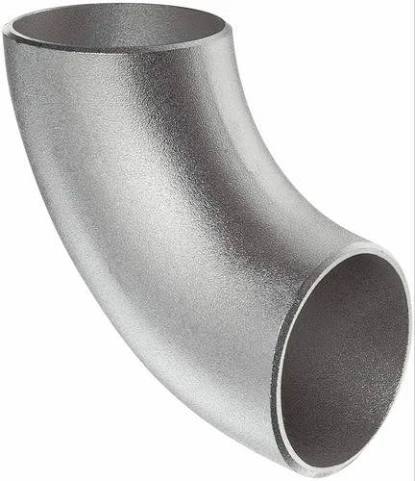
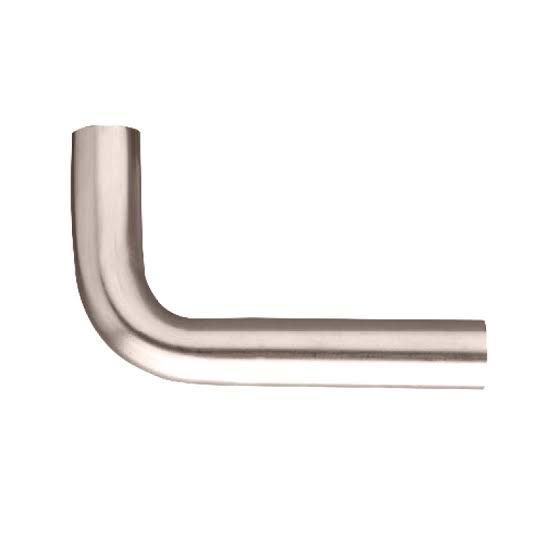
Stainless Steel 90° Elbow with Plain End
Stainless steel 90 degree elbow with plain end for tube runs. Review plain-end definition, tube OD, wall, cutting, welding and inspection.
Description
A stainless steel 90° elbow with plain end is used where the elbow end remains plain for field cutting, preparation, and welding. Plain End is not an interchangeable shorthand: confirm that the end is actually plain, whether cutting allowance is provided, whether the end face is square, and how the supplier defines the weldable zone.
Stainless steel weld elbow dimensions
The stainless steel weld elbow dimensions check starts with outside diameter, wall thickness, and roundness of the matching tube or pipe. State tube OD, wall thickness or Schedule, bend angle, radius, and center-to-end dimensions in the inquiry.
If thin-wall tube or field sleeving is involved, discuss cutting, edge cleaning, alignment, and support before ordering a stainless steel 90° elbow with plain end.
Stainless steel pipe fittings weld
Some catalogs distinguish a weldable tube end, a trimmed end, and a butt-weld bevel. A stainless steel 90° elbow with plain end may require field bevel preparation or may belong to a specific tube system; the final configuration must come from the supplier drawing and welding procedure.
The stainless steel pipe fittings weld information should not be expanded into a standard bevel, fixed wall thickness, or completed weld inspection unless the product documents support that statement.
Stainless steel 90 deg bend
Before field cutting a stainless steel 90° elbow with plain end, verify allowance and end protection. After cutting, follow the project welding procedure for cleaning, alignment, welding, and inspection. Do not shorten the elbow simply to solve a dimension problem without checking fit-up space.
At receipt, check the plain end, ovality, wall thickness, weld-end protection, and marking. If the supplier uses Plain End, Tube End, or Butt Weld End as separate configurations, resolve the difference with the end profile drawing.
Stainless steel pipe elbow dimensions
The stainless steel pipe elbow dimensions record should state whether field cutting is allowed, how the center dimension is preserved, and which documents cover end-face tolerance, material, batch, welding preparation, and inspection.
Because the field team carries more responsibility for an unprepared end, the quotation should include cutting allowance, end protection, cleaning, and inspection scope for the selected stainless steel 90° elbow with plain end.
Stainless steel pipe elbow dimensions
| Parameter | Review Specification |
|---|---|
| Angle | 90 degrees; confirm angular tolerance against the product drawing. |
| End | Plain End; confirm length, end face, and cutting requirements from the drawing. |
| Tube OD | Confirm against the matching tube or system specification. |
| Wall thickness / Schedule | Confirm against the design and straight-pipe specification. |
| Radius | Use the drawing for centerline radius and end dimensions. |
| Material | State the project stainless steel grade and material standard. |
| Welding | Follow project WPS, edge preparation, and inspection requirements. |
| Surface | Confirm pickling, passivation, or general surface requirement. |
| Documents | Confirm dimensional, material, batch, and welding-related documents. |
Frequently Asked Questions
Is a Plain End simply a Butt Weld End without a bevel?
Not necessarily. Suppliers may define Plain End, Tube End, and Butt Weld End differently. Confirm the end profile and required field preparation from the product drawing and welding instructions.
Can a plain-end elbow be cut shorter on site?
Not arbitrarily. Cutting changes the center-to-end dimension and fit-up space. Check the drawing, process, and project engineering requirements before any field modification.
More Products