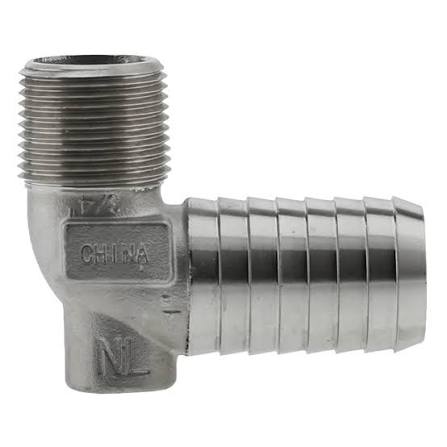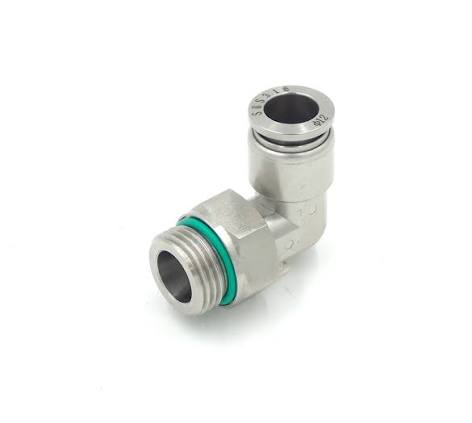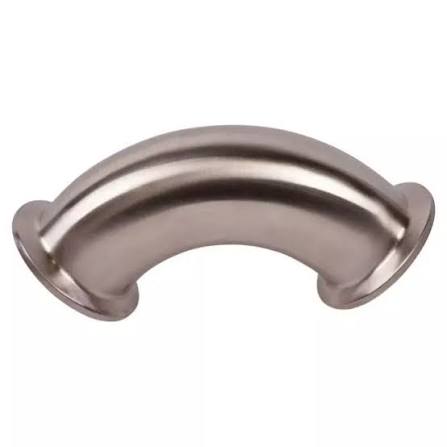
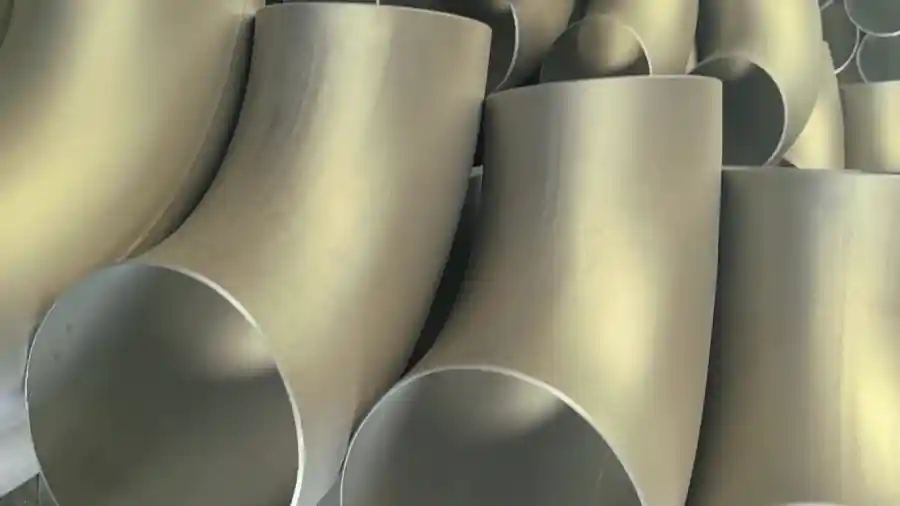
310S Stainless Steel Elbow for Oxidizing Heat Service
310S stainless steel elbow for high-temperature oxidizing service. Compare grade identity, angle, radius, Pipe Schedule, Weld Ends, heat number, and MTR.
Description
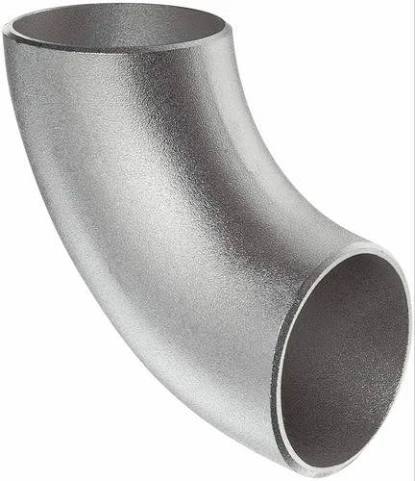
310s stainless steel elbow is used in high-temperature butt-weld piping for projects that specifically require 310S or UNS S31008 material. Typical applications include furnace connections, heat-treatment equipment, and high-temperature gas lines. The high chromium and nickel content of 310S supports material stability in high-temperature oxidizing environments.
310S High-Temperature Service Procurement Checklist
| Field | Required Input |
|---|---|
| Service Temperature | Provide normal and maximum temperatures and their duration; do not use a single peak value as the design basis |
| Atmosphere | Identify oxidizing, low-oxygen, sulfur-bearing, or other high-temperature service conditions |
| Operating Mode | Distinguish continuous operation, start-stop cycling, and thermal-shock frequency |
| Design Basis | Provide pressure, temperature, piping code, material specification, and design-life requirements |
ss310s stainless steel elbow and sus310s stainless steel elbow
SS310S and SUS310S are common market grade descriptions. The formal order should still standardize the material as 310S or UNS S31008 under the applicable specification, and the purchase order, product marking, heat number, and MTR should use the same grade system. 310, 310H, or other heat-resistant steels should not be accepted as substitutes solely because their names are similar.
stainless steel butt weld 90 degree elbows
A 90° butt-weld elbow requires confirmation of NPS, center-to-end dimensions, end wall thickness, bevel, and Manufacturing Class. The elbow and mating pipe should also use compatible materials, Pipe Schedule, welding consumables, and project WPS to avoid added local stress caused by end mismatch or fit-up deviation in high-temperature piping.
stainless steel long radius elbow dimensions
Long Radius is commonly identified as 1.5D and is used where a more gradual change in direction is needed. The center-to-end dimensions, angle, and allowable tolerances should still be checked against ASME B16.9 or the project drawing. If space limitations require Short Radius, flow, thermal expansion, and support conditions should be evaluated again.
schedule 40 stainless steel pipe elbow
Schedule 40 describes a wall-thickness series and does not represent a fixed working pressure or fixed temperature capability. The inquiry should state NPS, the exact Schedule, and the mating pipe end wall thickness, and should verify the internal transition and Weld Ends. Pressure-temperature limits still depend on material, wall thickness, design code, and operating conditions.
310s stainless steel elbow Documentation and Receiving Inspection
At receipt, verify that the grade, Manufacturing Class, heat number, MTR, dimensional records, and any additional NDE or PMI documents correspond to the product marking. The suitability of 310S also depends on the high-temperature atmosphere and thermal cycling, so the material grade should not be presented as a general guarantee for every high-temperature medium.
Thermal Expansion and Support Review for High-Temperature Piping
High-temperature piping should also be reviewed for thermal expansion, support conditions, and combinations with adjacent materials. Where rigid restraints, frequent start-stop cycles, or connected components with different expansion coefficients are located near the elbow, local stress may become a design-controlling factor. Procurement drawings should identify installation orientation, support locations, and weld-joint distances rather than judging the entire piping run only from the material’s oxidation resistance.
310s stainless steel elbow Specifications
| Parameter | Specification |
|---|---|
| Product Name | 310S Stainless Steel Elbow |
| Product Type | 90 Degree Long Radius Butt Weld Elbow, common preset |
| Material Family | Heat-Resistant Austenitic Stainless Steel |
| Material Grade | 310S / UNS S31008, subject to applicable fitting specification |
| Elbow Angle | 45°, 90° or 180°, subject to order confirmation |
| Bend Radius | Long Radius common preset; Short Radius subject to design review |
| Dimensional Standard | ASME B16.9 or project-specified standard |
| Pipe Schedule | Schedule 40 or other schedule specified to match the line pipe |
| Connection Type | Butt Weld |
| End Preparation | Beveled Weld Ends per ASME B16.25 and project WPS |
| Manufacturing Class | Seamless or welded class according to the applicable fitting specification and order |
| Documentation | heat number, MTR and marking; NDE or PMI subject to purchase order |
| Service Data | Temperature, atmosphere, operating cycle, pressure and applicable piping code required |
| Customization Boundary | Angle, radius, size, schedule, grade, Weld Ends, marking and documents, subject to technical review |
Frequently Asked Questions (FAQ)
1. Can a 310S elbow be selected only by its maximum service temperature?
No. Maximum temperature is only one input. Duration, thermal cycling, atmosphere composition, pressure, wall thickness, and design code must also be evaluated. The same temperature may require different materials and inspection requirements under different atmospheres or start-stop frequencies.
2. Can 310S and 321 stainless steel elbows be directly interchanged?
No. They should not be treated as interchangeable by default. Their alloy designs and common high-temperature service logic differ, and the project may specify different pipe materials, welding consumables, heat treatment, and allowable stresses. Written approval from the designer is required before replacing a 310s stainless steel elbow.
More Products