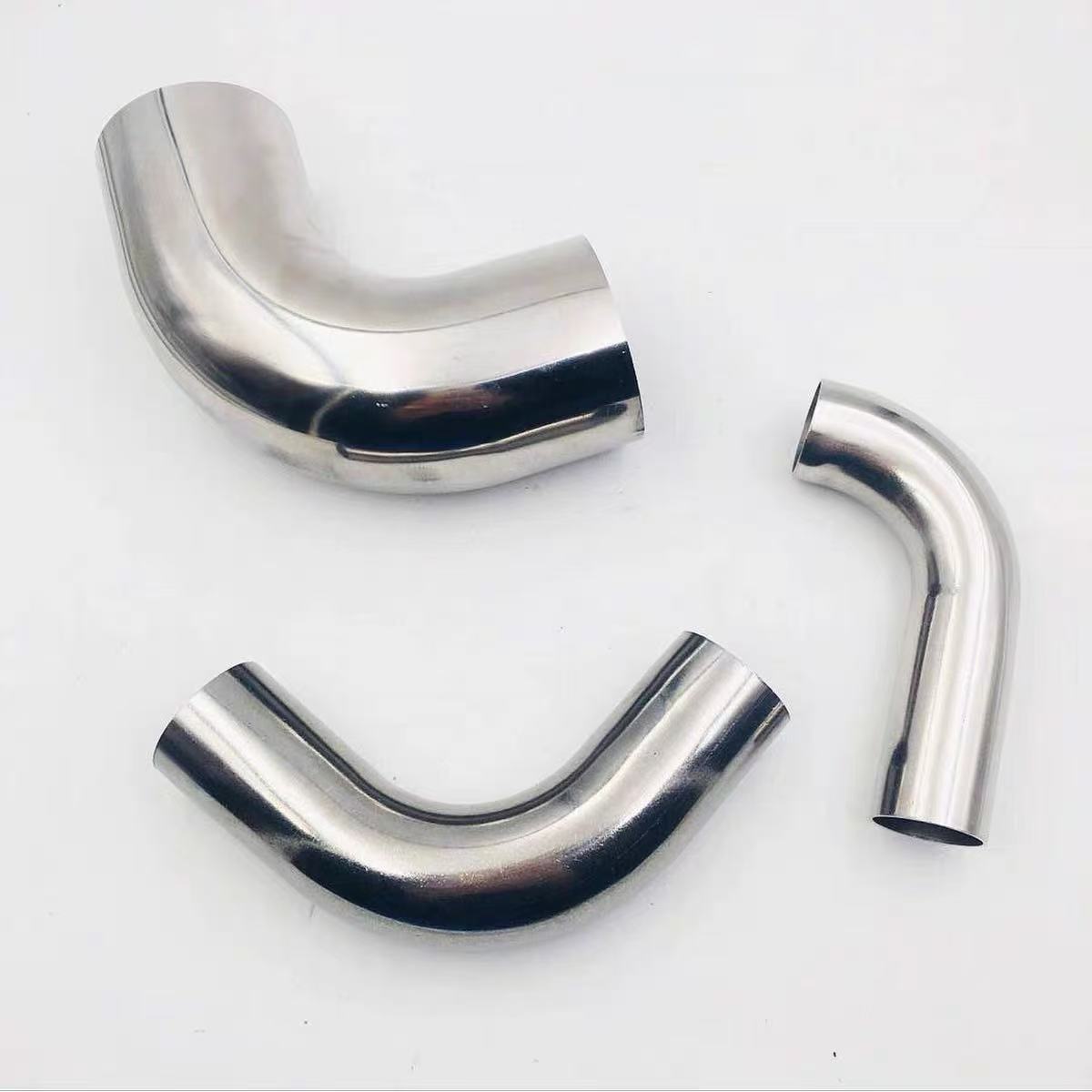
Stainless Steel Sanitary Elbow for Clean-Process Piping
Stainless steel sanitary elbow for clean-process piping. Compare tube OD, bend angle, weld or clamp ends, material grade, surface finish, and documents.
Description
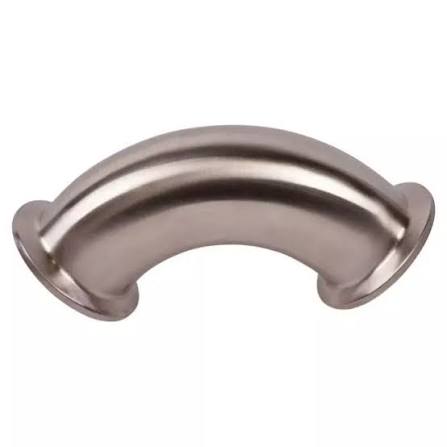
stainless steel sanitary elbow is intended for clean-process piping where residue control, cleaning performance, and internal surface condition must be managed. Its purchasing logic differs from that of an ordinary industrial elbow. In addition to angle and Tube OD, the buyer must define the standard system, Material Grade, internal-surface Ra, Weld Ends or Clamp Ends, wall thickness, marking, and MTR.
Standard System Selection
| Standard System | Common Application | Mandatory Confirmation Items | Publication Boundary |
|---|---|---|---|
| ASME BPE | Biopharmaceutical and high-purity processing | 316L, Tube OD, surface grade, Weld Ends, welding, and traceability | Use a BPE designation only when manufacturing, inspection, and certification conditions are satisfied. |
| 3-A / Tri-Clover | Food, beverage, dairy, and other hygienic piping | Tube OD, end pattern, ID and OD surfaces, and cleaning requirements | 3-A authorization and the specific product scope require separate confirmation. |
| ISO EN 10357-D / ISO 2037 | Metric hygienic piping | Metric Tube OD, wall thickness, Ra, and Weld Ends | The dimensions must match the system used throughout the piping line. |
| BS 4825 | Imperial or project-specified hygienic piping | Material, Tube OD, tolerances, end pattern, and surface requirements | Confirm against the project standard and manufacturer’s drawings. |
The same nominal size may correspond to different Tube OD, wall thickness, end geometry, and allowable tolerances under different hygienic standards. Inquiries and incoming inspection should use the complete standard name rather than stating only sanitary size or interpreting the fitting according to ordinary piping NPS.
Effect of Internal Surface Treatment on CIP/SIP
CIP circulates cleaning solution through the system, while SIP also introduces steam, thermal cycling, and condensate drainage conditions. Ra, polishing texture, local scratches, pits, weld transitions, and the drainage condition at the lowest point of the elbow ID surface all affect whether residues can be removed effectively.
A lower Ra does not automatically indicate a higher cleanliness grade. Ra is a statistical roughness value over a sampling length and cannot by itself prove the absence of scratches, orange peel, folds, weld depressions, or local contamination. The Ra value should therefore be confirmed together with the finish code, measurement direction, sampling location, instrument information, and visual acceptance requirements.
- CIP focus: confirm ID Ra, a smooth elbow transition, the absence of cleaning dead zones, and whether the system can complete flushing at the design flow velocity.
- SIP focus: confirm Material Grade, Weld Ends, the welding procedure, post-weld discoloration acceptance, and the condensate drainage path.
- Clamp Ends focus: also verify the clamp, gasket, end cap, and internal-bore misalignment after assembly.
- Weld Ends focus: verify Tube OD, wall thickness, roundness, end squareness, and the straight length required for orbital-welding clamps.
Surface Roughness Matters More Than “Mirror Appearance”
A sanitary elbow should specify the treatment requirements for the internal and external surfaces separately. Ra is a measurable parameter. Terms such as polished, electropolished, SF1, or SF4 must correspond to a specific standard or the manufacturer’s finish code. Stating only mirror finish does not define internal-surface roughness, polishing direction, or the inspection method.
For orbital welding or high-purity systems, the roundness, wall thickness, end squareness, sulphur-content control, and post-weld discoloration acceptance of the Weld Ends should also be confirmed. Where the elbow includes a Tangent, the straight length also affects clamping, orbital welding, and field fit-up.
Clean-Process Inquiry Checklist
- State the standard system and application, such as ASME BPE, 3-A, ISO EN 10357-D, or a project-specific specification.
- Provide Tube OD, wall thickness, 90° or 45°, centreline radius, and whether a Tangent is required.
- Confirm 304L or 316L and state whether heat number, MTR, and material traceability are required.
- Specify the Ra or finish code for ID and OD separately instead of replacing a value with the phrase sanitary polishing.
- State Weld Ends, Clamp Ends, or another end pattern and confirm compatibility with the existing piping dimensional system.
- Define cleaning, drainability, packaging, end caps, and additional inspection requirements.
stainless steel sanitary elbow Specifications
| Parameter | Specification |
|---|---|
| Product Name | Stainless Steel Sanitary Elbow |
| Product Type | 90 Degree Sanitary Weld Elbow |
| Elbow Angle | 90°; 45° subject to order confirmation |
| Tube OD Range | 1/2 inch to 6 inch, common preset; larger sizes by review |
| Material | 304L or 316L Stainless Steel; 316L common for high-purity service |
| Tubing Basis | ASTM A270 / A270M or project hygienic tubing standard |
| Hygienic Standard | ASME BPE, 3-A, ISO EN 10357-D / ISO 2037 or BS 4825, subject to confirmation |
| Wall Thickness | Specified with Tube OD and selected standard |
| Bend Radius | 1D, 1.5D or tangent configuration, subject to standard and order |
| End Connection | Weld Ends; Clamp Ends or other hygienic ends subject to order confirmation |
| Surface Finish | ID and OD Ra or finish code specified with the order; electropolish by review |
| Manufacturing Type | Formed or fabricated sanitary fitting, subject to product configuration |
| Inspection Items | Visual, Dimensional and Surface Roughness Inspection; additional examination by order |
| Documentation | MTR, heat traceability, surface-finish record and marking, subject to order |
| Customization | Size, angle, radius, tangent, end type, finish, marking and packaging, subject to technical review |
Frequently Asked Questions (FAQ)
1. Can an ordinary stainless steel butt weld elbow directly replace a sanitary elbow?
Replacement based only on angle and material is not recommended. Hygienic piping also involves the Tube OD system, internal-surface Ra, end tolerances, cleaning and drainability, welding requirements, and document traceability. Before replacement, the project specification should confirm the dimensional, surface, and certification requirements.
2. How should Weld Ends and Clamp Ends be selected?
Weld Ends are suitable for permanent connections and help create a continuous process flow path. Clamp Ends allow disassembly, inspection, and maintenance, but the clamp, gasket, and end-cap system must also be checked. The final choice should consider the cleaning method, disassembly frequency, welding procedure, and project standard.
More Products