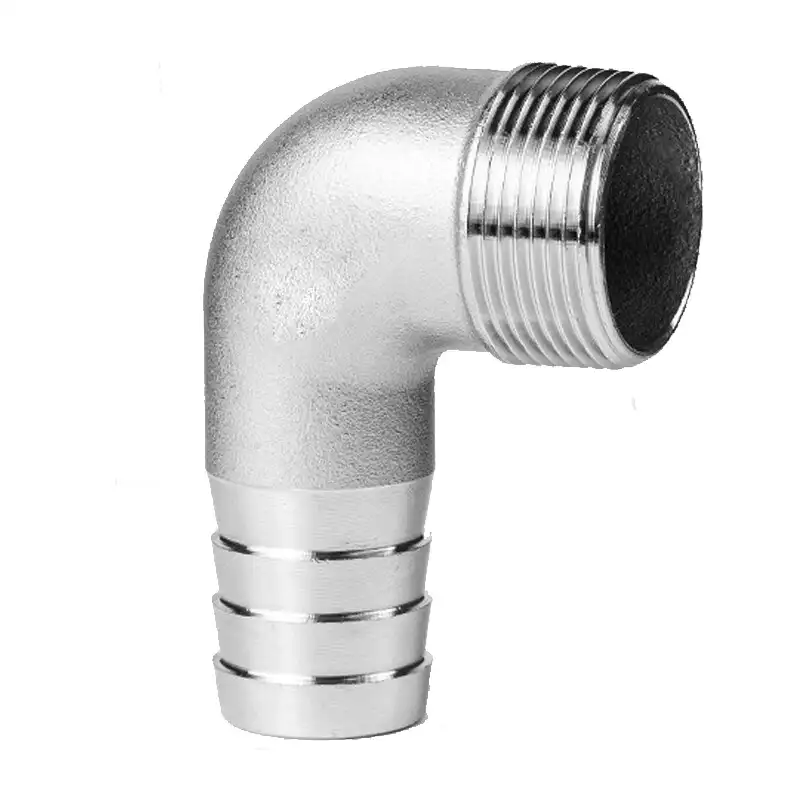
Stainless Street Elbow for Instrument and Valve Ports
Stainless street elbow with Male x Female threads for valve and instrument ports. Compare NPT or BSPT, size pairing, material, orientation, and price factors.
Description
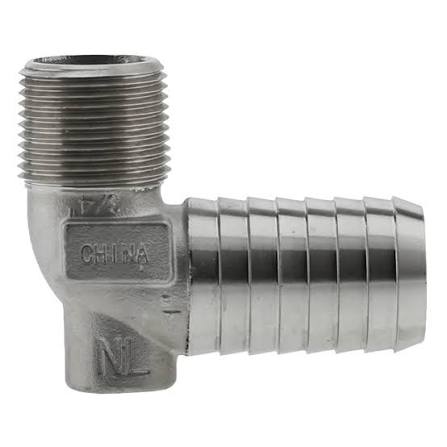
stainless street elbow combines a Female Thread and a Male Thread in one 90° body, making it suitable for connection points that already have internal threads and limited installation length. The Male end can screw directly into a valve, pressure gauge, transmitter connection, or a Female Port on a skid-mounted panel, while the other end continues the piping. In a typical layout, this arrangement can eliminate a separate nipple.
Why the Male x Female Structure Shortens the Connection Chain
A conventional Female x Female elbow usually requires a separate Hex Nipple or nipple to connect to an equipment Female Port. The Street pattern integrates the male threaded end into the elbow body, reducing one separate fitting and shortening the total installed length at a valve, instrument, or branch connection.
This compact arrangement also reduces field-adjustment allowance. If the equipment position, pipe length, or final direction may change during installation, a Female x Female elbow with a separate nipple is generally easier to adjust and replace.
Outlet Orientation Depends on Thread Engagement, Not Only on 90°
Tapered pipe threads tighten progressively as engagement increases, so the final outlet orientation of the street elbow is also affected by thread engagement, sealing material, and assembly sequence. Before installation, determine which side receives the Male end and reserve enough wrench clearance. After the specified tightening condition is reached, the fitting should not be loosened casually to correct the direction.
NPT, BSPT, and End Size Combinations
NPT is typically identified according to ASME B1.20.1, while BSPT pressure-sealing threads are typically identified according to ISO 7-1. The two systems use different thread forms and reference dimensions. Orders and incoming inspection documents should identify the exact standard rather than stating only pipe thread.
Street elbow may use equal-size Male x Female ends or a Reducing Street Elbow configuration. For an inquiry, specify the Female and Male end sizes separately, for example 1/2 inch Female NPT x 1/4 inch Male NPT, to avoid an assumption that both ends are the same size.
Factors That Affect Price
- Material and manufacturing: 316 stainless steel, 304 stainless steel, cast, or forged configurations have different cost bases.
- Size combination: equal-size and reducing Male x Female combinations may require different tooling, inventory, or machining.
- Thread system: NPT, BSPT, and thread-gaging requirements affect machining and inspection.
- Documentation: material certificates, thread-gaging records, marking, and additional inspection add to the delivery scope.
- Order conditions: quantity, packaging, protection, and destination logistics all affect the final quotation.
Connection Arrangement Comparison
| Comparison | Stainless Street Elbow | Female x Female + Nipple | Reducing Street Elbow |
|---|---|---|---|
| Application | Existing Female Port, compact space, fixed direction | More field-adjustment allowance required | Direction change and size reduction at the same point |
| Connection Chain | One Male x Female elbow | Female x Female elbow + Hex Nipple | Different Female and Male end sizes |
| Installed Length | Usually shorter | Usually longer | Compact, but the size combination is more fixed |
| Ordering Focus | Both end sizes, thread system, outlet direction | Elbow size, nipple length, thread system | Specify Female and Male ends separately |
stainless street elbow Specifications
| Parameter | Specification |
|---|---|
| Product Name | Stainless Street Elbow |
| Product Type | 90 Degree Male x Female Threaded Street Elbow |
| Elbow Angle | 90°; 45° subject to order confirmation |
| End Pattern | Female Thread x Male Thread |
| Size Range | 1/8 inch to 2 inch, common 316 stainless preset |
| Material | 316 Stainless Steel common; 304 subject to order confirmation |
| Material Standard | ASTM A351 / A351M for cast configuration |
| Material Grade | CF8M / CF8, subject to order confirmation |
| Pressure Class | Class 150 common cast configuration |
| Thread Standard | NPT per ASME B1.20.1; BSPT per ISO 7-1 subject to confirmation |
| Manufacturing Type | Investment Cast or Cast; forged configuration reviewed separately |
| Sealing Method | Compatible thread sealant selected for service conditions |
| Inspection Items | Visual, Dimensional and Thread Gaging Inspection |
| Customization | End sizes, thread type, angle, material, marking and documents, subject to technical review |
Typical Interface Locations
- Valve and instrument ports: confirm the thread standard, size, and allowable engagement depth of the Female Port.
- Pressure-tapping and sampling branches: verify outlet direction, sealing material, and space for later disassembly.
- Skid-mounted panels: check wrench access, interference with adjacent components, and maintenance clearance.
- Reducing connections: specify the Female and Male end sizes separately instead of ordering by a single size.
Frequently Asked Questions (FAQ)
1. Why must the Male and Female end sizes be specified separately?
Street elbow is available in both equal-size and Reducing Street Elbow configurations. Providing only one size may be interpreted as equal-size ends. Specifying the Female and Male end sizes separately helps confirm the interfaces, overall dimensions, and quotation.
2. Can NPT and BSPT be connected directly?
Direct connection is not recommended. NPT and BSPT are different thread systems. Even if partial engagement is possible, it does not confirm the required engagement or sealing condition. Orders, drawings, and field interfaces should use the same standard, or a verified adapter should be used where necessary.
More Products