Why Are Stainless Steel Fitting Dimensions So Critical?
A correct understanding of stainless steel fitting dimensions is essential in industries such as petrochemical, food processing, or pharmaceuticals to avoid safety hazards and economic losses.
1. Understanding “NPS” and “DN”: The Logic Behind the Sizes
✔️For 2″ stainless steel fittings, the dimensions follow standards set by the American National Standards Institute (ANSI) or the International Organization for Standardization (ISO).
✔️For example, a 2-inch Sch 40 stainless steel elbow has an inside diameter of approximately 2.067 inches, while the outside diameter is fixed at 2.375 inches. Without cross-checking against stainless steel pipe elbow dimensions (elbow dimension tables), selecting the wrong wall thickness (Schedule) can easily lead to welding misalignment or insufficient pressure-bearing capacity.
2. Center-to-End Distance: The Guarantee of Installation Accuracy
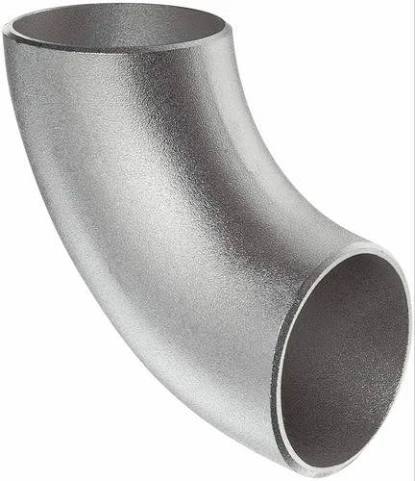
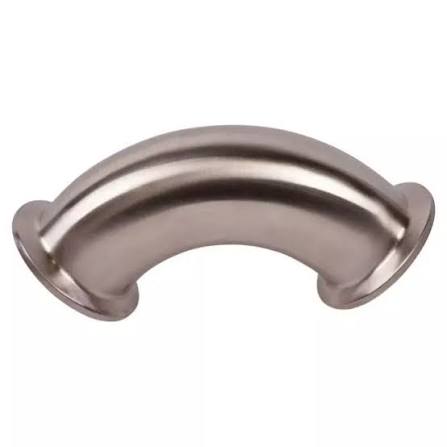
✔️This is one of the most overlooked dimensions during installation. For stainless steel long radius elbow dimensions, the center-to-end distance is typically 1.5 times the nominal pipe size (NPS).
✔️For instance, a 4-inch long radius elbow has a standard center-to-end distance of 6 inches. In densely packed pipe racks, ignoring this dimension may cause physical interference between fittings or even make flange installation impossible. For commonly used 4″ stainless steel pipe fittings, the length difference between long radius (1.5× diameter) and short radius (1.0× diameter) often determines the entire layout design of the pipe rack.
3. Wall Thickness and Inside Diameter: Key Factors for Flow Velocity and Pressure Drop
✅With the same outside diameter, the inside diameter can vary significantly due to different wall thicknesses (e.g., Sch 40 vs. Sch 80). ✅When selecting 3″ stainless steel pipe fittings, it is critical to confirm that the inside diameter matches that of the pipe.
✅If the fitting’s inside diameter is smaller than the pipe’s, a “reduction” effect occurs, causing abrupt changes in media flow velocity, increased turbulence, and energy losses.
✅When referring to stainless steel tube elbow dimensions, it is recommended to use calipers to physically measure the wall thickness and ensure compliance with manufacturing standards such as ASTM A403 or ASME B16.9.
4. Tolerances for Angle and Radius
✅In addition to length and diameter, angular deviation and roundness are also key factors affecting installation quality. High-quality fittings are manufactured with strict tolerance control on bending angles (e.g., 45° or 90°).
✅If the deviation is too large, even if the length data in stainless steel fitting dimensions are completely correct, the welded joint may experience additional stress after completion, thereby shortening the service life of the equipment.
Conclusion
📌Mastering the dimensional details of stainless steel fittings is the first step in ensuring the safe operation of piping systems. As a professional fitting supplier, AIFN produces all products in strict accordance with international standards and provides detailed dimensional inspection reports.
📌If you have any questions during the selection process, feel free to consult our product catalog or contact us at any time.