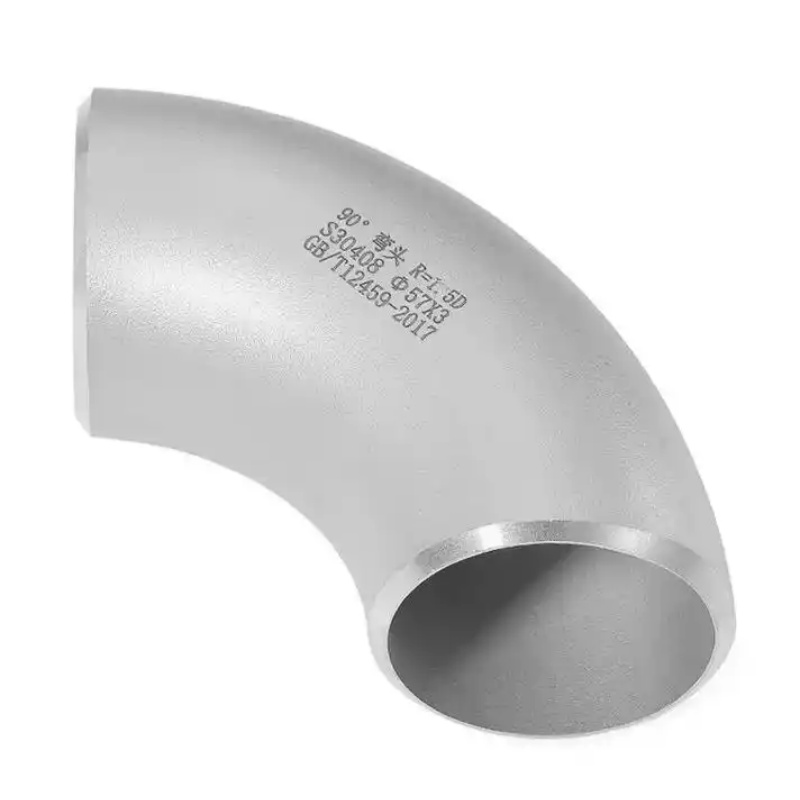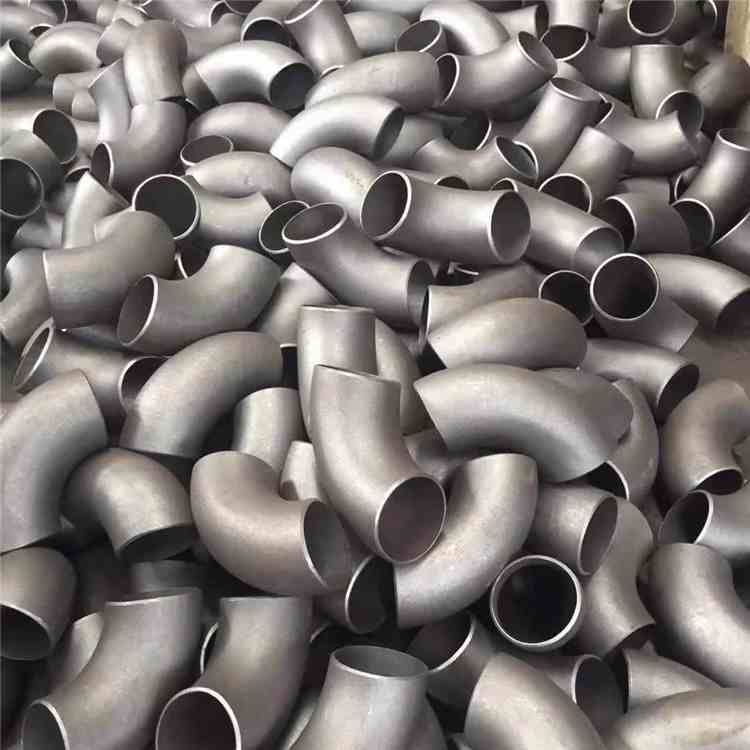
In piping systems, we often see elbows connecting straight pipes to change the direction of fluid flow. Why are some pipes made with elbow shapes? This involves key engineering considerations such as fluid mechanics, pressure loss control, space optimization, and long-term operational reliability.
✅First, the core function of an elbow is to change the direction of the medium. When pipelines need to bypass obstacles, adapt to building structures, or connect equipment at different elevations, using standardized elbows is more economical and reliable than bending pipes on site.
➡️Common angles include 45°, 90°, and 180°, but other angles can be customized according to system design. Familiarity with different pipe elbow angle types helps engineers precisely control flow direction and reduce the number of additional fittings.
✅Second, the geometric parameters of elbows directly affect fluid resistance and energy consumption. In oil, chemical, or water supply systems, improper elbows can induce turbulence and vortices, significantly increasing pumping costs.
➡️According to the ASME B16.9 standard, a 90° Short Radius Elbow (R=1.0D) has a local resistance coefficient of approximately 0.9, while a Long Radius Elbow (R=1.5D) can reduce the coefficient to about 0.6.
➡️This explains why engineers must carefully weigh the choice between long radius vs short radius elbow: long radius elbows reduce fluid impact and pressure loss but require more space; short radius elbows are more compact and suitable for space-constrained areas such as mechanical rooms or casings.
✅Third, materials and manufacturing processes determine the durability and safety of elbows. Industrial-grade butt-welded elbows typically conform to ASME B16.9 or ASTM A234 WPB standards, with wall thicknesses up to SCH 160 (approximately 16 mm). For high-pressure steam or corrosive media, stainless steel 304/316L or alloy steel is selected.
✅Fourth, the flow resistance characteristics inside elbows can be optimized through computational fluid dynamics (CFD) simulation. For high-viscosity or particle-laden fluids, designers pay special attention to flow resistance in pipe bends, adopting large curvature radii (e.g., R=3D) or adding guide vanes to suppress secondary flow and erosion.
✅Finally, field evidence from practice shows that properly selecting long radius elbows (R≥1.5D) combined with appropriate welding techniques (e.g., argon arc backing) can reduce local pressure loss by 20–30%. In a pumping station operating 8,000 hours per year, this translates to savings of tens of thousands of kilowatt-hours of electricity.
▶️Additionally, using seamless elbows with guided supports for high-temperature steam lines effectively prevents fatigue cracking caused by thermal stress concentration.
📝The use of elbow shapes in pipes is a smart balance of efficiency, space, and cost in fluid transportation.