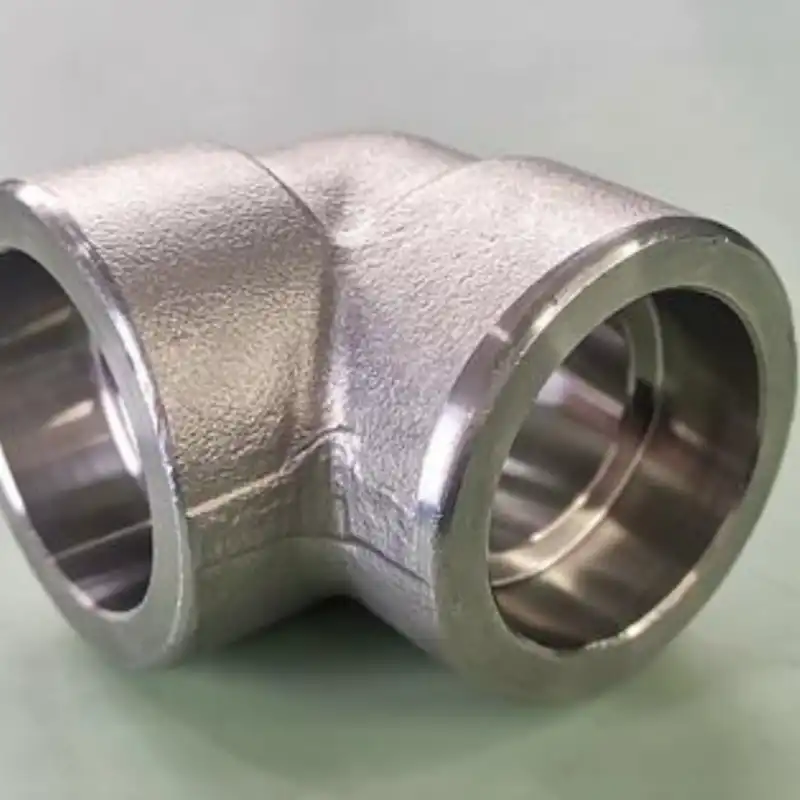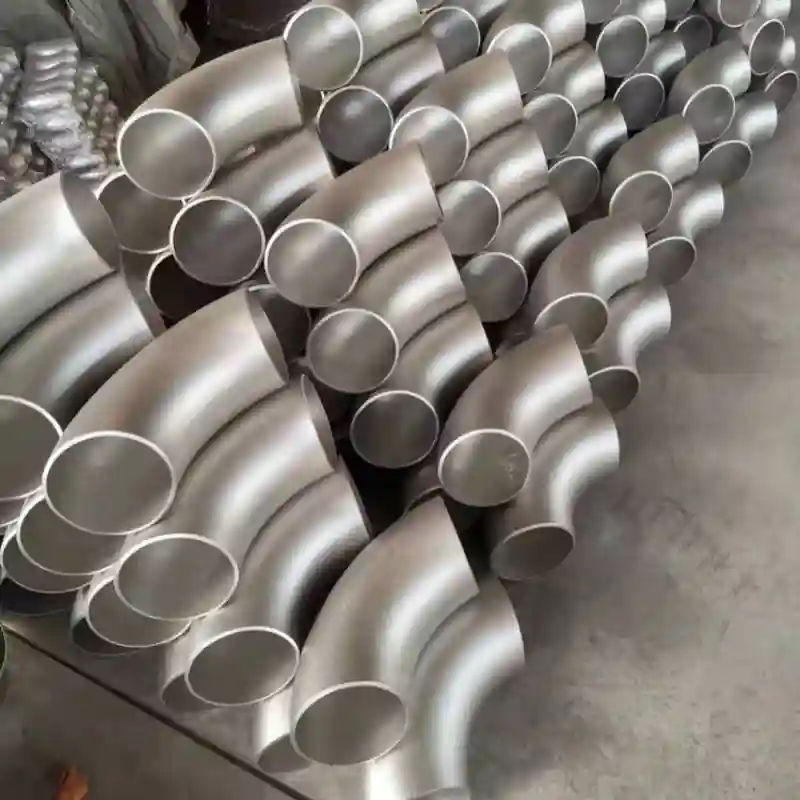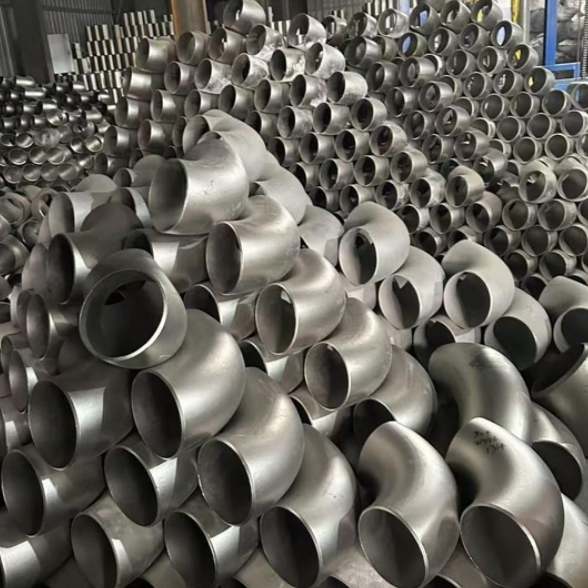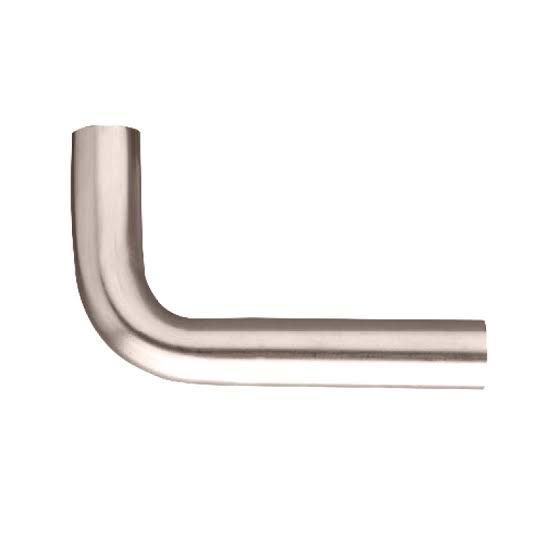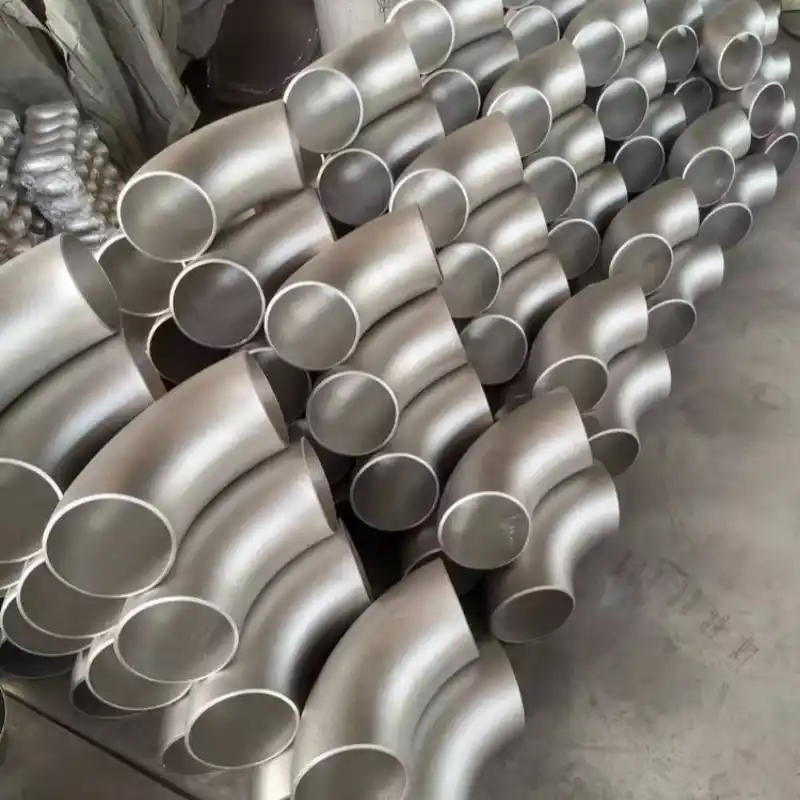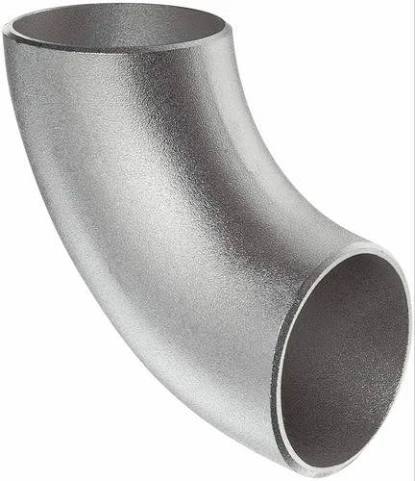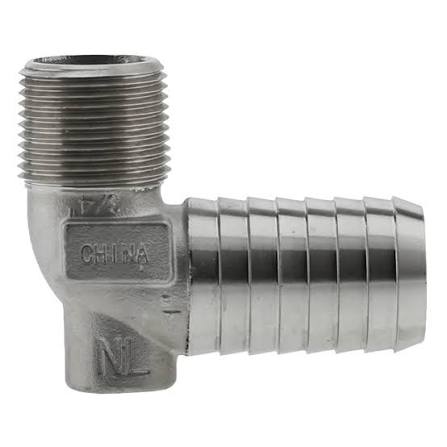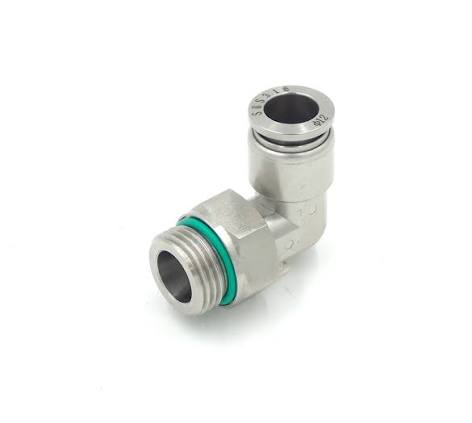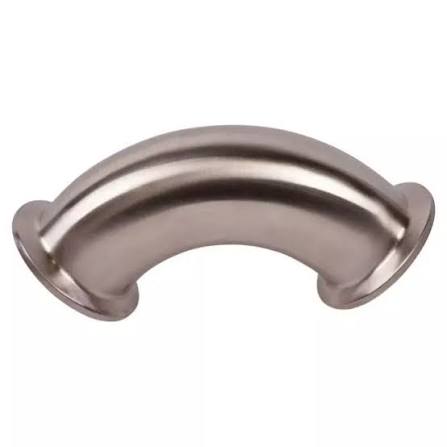
In piping systems, the pipe elbow is one of the most common and critical connecting components. Its core function is to change the direction of fluid flow, helping pipelines bypass obstacles or adapt to spatial layouts. For example, standard 90° and 45° elbows enable right-angle or acute-angle turns, while 180° elbows are commonly used in U-shaped loops or thermal expansion compensation.
1. Precise control of flow direction and pressure loss
✔️ The design of an elbow directly affects fluid dynamics performance. Taking the 90-degree pipe elbow function as an example, when fluid passes through an elbow, the velocity difference between the inner and outer sides generates secondary flow, leading to local pressure loss. This loss is typically quantified by the elbow pressure drop coefficient (resistance coefficient K value).
✔️ For elbows of the same diameter, a short-radius elbow (R=1.0D, where D is pipe diameter) has a K value of approximately 0.9, whereas a long-radius elbow (R=1.5D) can reduce the K value to about 0.6 — meaning pressure loss is reduced by roughly 30%. This is why the industrial standard ASME B16.9 recommends long-radius elbows for high-pressure applications.
2. Improving system efficiency and reliability
✔️ Another important role of elbows is to optimize pipe elbow flow efficiency. By selecting an appropriate bending radius (e.g., large-radius elbows of 3D, 5D, or even 10D), turbulence and vortex losses can be significantly reduced, while also lowering the risk of particulate deposition at the bend.
✔️ In industries such as petrochemicals or food and pharmaceuticals, long-radius elbows with smooth inner walls prevent media stagnation and meet the cleaning requirements of sanitary piping systems.
3. Material and parameter selection
The performance of elbows is also closely related to material, wall thickness, and manufacturing processes. For instance, stainless steel 304/316L elbows offer corrosion resistance, while carbon steel elbows (e.g., ASTM A234 WPB) are suitable for high-temperature steam systems. Actual selection must consider flow rate, temperature, and allowable pressure drop values (typically controlled within 0.1–0.5 bar).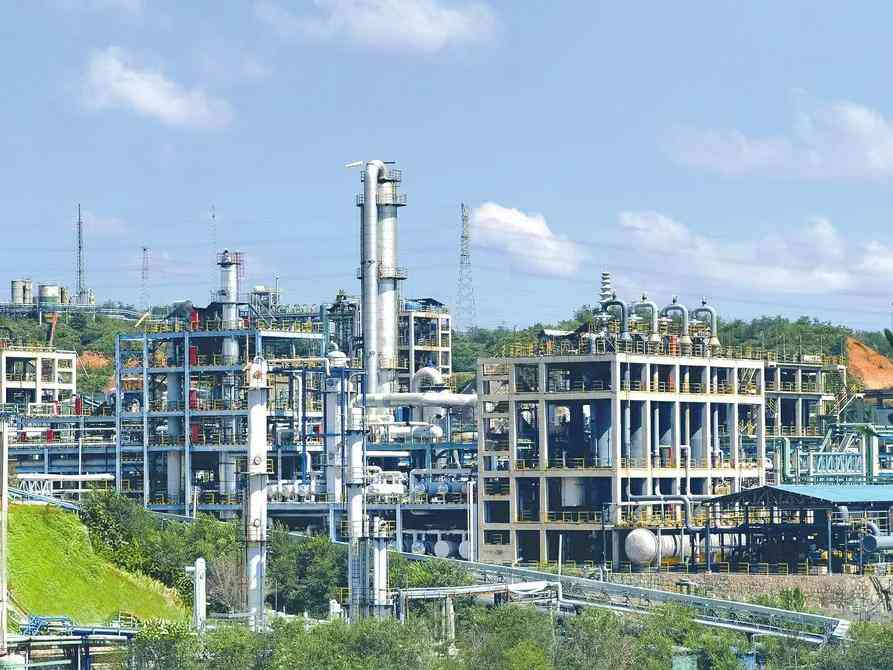
Conclusion
📝Whether in building water supply and drainage, industrial pipelines, or nuclear cooling circuits, elbows play a balancing role between directional changes and energy conservation. Understanding the 90-degree pipe elbow function, resistance coefficient, and flow efficiency helps engineers design more energy-efficient and durable piping networks.